

The first time I spoke with Amanda Yarnell, it took all the willpower in my bones not to interrupt her with excitement every five seconds. Yes! Good point! Tell me more!
Amanda is the Senior Director of the Center for Health Communication and Lecturer at Harvard T.H. Chan School of Public Health. In 2023, she started the Center’s Creator Program, which equips social media creators to counter misinformation and spread evidence-based science to their communities.
When I started Meta’s global information ecosystem program, public health was the driving issue behind our efforts to help institutions share expert information online. Hearing Amanda’s perspective from the institutional side was eye-opening and affirming: it’s about building bridges, whichever side you’re on.
We sat down to talk about digital comms, public health, and science as a public service. Answers are edited for length and clarity.
◾
Jena Wuu: Hi Amanda! Let’s start broad. Why is communication so important in public health?
Amanda Yarnell: There is no public health without communication. It’s as essential as epidemiology or biostatistics. You can have terrific evidence-based policies, but if you’re not also investing in bringing people along with those innovations, you’re not going to see the success you want and the public health outcomes we deserve. The last few years have made that more clear than ever.
JW: What do digital comms skills look like for public health?
AY: Traditionally, comms training for scientists focused on how they communicate with each other. Like how you give a talk or how you write a scientific paper.
Increasingly, we live in a world where information is traveling more quickly than ever. It’s more cacophonous, and people expect to be able to do their own research. But digital comms are often treated as something that’s easy to do, or you just do the same things you always did. And that’s just not true.
Digital platforms are much more participatory than any previous form of communication. They blend information and entertainment in a way that somebody coming out of a traditional scientific or public health training is not necessarily going to get. But engaging in those spaces is a skill that any scientist or public health leader needs to have if they want to make the impact on the world that they hope to.
In some ways, digital comms are perfectly matched to scientists. There’s a huge amount of strategy, data, and analytics. It’s way more measurable.
It’s a huge opportunity, and so important. Especially in public health, where it’s in the name. “Public” is part of our discipline.
JW: How is the relationship evolving between public health experts and institutional comms teams, which have traditionally led public engagement?
AY: In the current world, speaking as an institution is only going to get you so far – that’s a broader issue than public health. As we see a decay of trust in institutions, trust is increasingly being transferred over to individuals. That’s why you see brands investing in user-generated content, for example, because they know that consumers are making decisions based on recommendations from individuals.
Public health has naturally – and appropriately – been a little slower to adopt some of that. But comms teams are looking to involve their experts, and to help scientists and experts build their own voice and platform. The problem is how to do that in a sustainable way, which is a huge challenge. But increasingly, they’re collaborative, which is a great thing.
There’s no reason that you have to abandon your own institutional platform. It’s just recognizing that your institutional platform is only going to be part of your communications ecosystem.
It’s a huge opportunity, and so important. Especially in public health, where it’s in the name. “Public” is part of our discipline.
JW: Many experts I speak with really don't like tech companies and wish people wouldn’t use digital platforms to find information. What is your advice to a public health expert (or any expert) who is wrestling with their personal feelings about tech and the reality of digital comms becoming necessary for their work?
AY: I mean, it’s not an ideal situation. We don’t live in the environment that we would design, but it is the environment in which we live. So in my view, you can either sit out and critique that from the sidelines, or you can wade in and make strategic investments that reflect your values.
It’s also about helping the people who are using the platforms. That’s really who we’re all doing the work for. It’s not for the platforms. It’s for the people you serve.
Of course, it’s smart to think about which platforms you want to be on. That’s a choice that you have to think through. It should be where your audience is, but also whether the platform reflects your values. Or if you can carve out a place on the platform that reflects your values.
JW: What advice would you give to credentialed people who are clearly experts in their fields, but don’t feel confident presenting themselves that way?
AY: The longer you work in a scientific field, the more you realize how much knowledge is shared. It’s actually an evidence-based conclusion that you know a lot about the specific area that you’re working in, but you also know a lot about what you don’t know. That’s part of the scientific process. So I think what you’re describing is the reaction to that reality. I welcome it when folks recognize what they know and what they don’t know.
As scientists, the most important value that we have is that science is conducted as a public benefit, and public dollars are invested in what we do. At its best, that requires that the public shares in it, which is why that cycle continues.
Online narratives can allow for or hinder different public health investments, and it’s not a given that the public will invest in scientific research. I think it’s incredibly important to society that we continue to do so. Therefore, I am interested in equipping scientists to talk about why what they’re doing is worthy of continued study.
JW: Well said. So why is there such a gap in digital comms education for public health students? For example, in Germany (where I live), only 3.5% of public health programs offer any modules for digital public health.
AY: In public health, there’s a long history of engagement at the in-person community level. Now, we live in a world where the community that is most important to somebody may not be physical at all. It may be digital.
Public health has been pretty underfunded in general, and public health organizations haven’t had that investment in digital comms. But I do think that is changing. In the United States, leaders of top public health schools are recognizing that communications is critical and that they need to do more. We [at the Harvard Chan School] are a good example of that.
We don’t live in the environment that we would design, but it is the environment in which we live. So in my view, you can either sit out and critique that from the sidelines, or you can wade in and make strategic investments that reflect your values.
JW: Tell me about the Creator Program you started at Chan. You started with mental health, right?
AY: Correct. The program started in 2023. At the time, mental health was a public health topic that people were not running away from. It was the most searched health topic on TikTok.
Mental health was also a perfect example of where audiences were seeking out more than just traditional health expertise. There are many mental health clinicians and providers doing education on these platforms, which is amazing. But there are also so many people sharing their own mental health journeys. So we wanted to think very carefully about how we were supporting both kinds of folks.
We had a theory that people were looking for both traditional, credentialed expertise, and the lived experience side of expertise. So we rolled out the Creator Program as a randomized, controlled trial on TikTok to test what kinds of supports they might each need. We found that the content-making supports we offered were equally valued and equally impactful.
JW: What are those supports?
AY: We make toolkits, which are short, creator-facing summaries with high-quality evidence on a specific topic. They are aimed at making it easier for a creator to make evidence-based content, and we make that available to any interested creators.
We also offer a select group of creators the opportunity to come to Harvard. It’s a way to think about how they can collaborate better with academic researchers, experts, and clinicians, as well as with each other. As part of that, the creators turn around and also teach our students about engaging people.
The summits are a non-financial incentive for creators to engage with our evidence-based materials. They give us the opportunity to empower creators further to become public health leaders on their platforms.
JW: There’s a quote I love from a creator who was reflecting on her experience in the program. She said, “I’m leaving here realizing that I’m a public health leader.”
AY: Unless you happen to be in public health, who comes in thinking that? But you know, they’re some of the most trusted voices.
Part of the long tradition of community engagement in public health is helping community leaders be sources of public health leadership. We’re just thinking about how we can extend that into digital spaces. If a church pastor or a barber can help their communities understand how they want to protect themselves and each other, then so too can someone who’s leading a digital community.
It’s opening up people’s eyes to the power that they have individually and the collective power that they have. And then letting them go. Our role is to convene and provide resources. But it’s their work to carry forward.
JW: Have the summits challenged any assumptions your faculty colleagues may have had about content creators?
AY: I have a lot of colleagues who don’t spend time on TikTok or Instagram, or any short-form, video-driven platform. They’ve never met a creator. So it’s easy to imagine caricatures, like a celebrity who’s hawking something, or somebody who is trying to sell you an illegal supplement.
But there are all kinds of creators on these platforms. They differ in audience size, motivations, the kinds of communities that they have accrued. There’s everything in between, and we’ve just pulled back the curtain a little bit on that. There are people who are true partners and share your values, and might even be open to collaborating.
It's not a given that the public will invest in scientific research. I think it's incredibly important to society that we continue to do so. Therefore, I am interested in equipping scientists to talk about why what they're doing is worthy of continued study.
JW: Is there anyone that you would like to highlight – either an individual creator or an institution – who is making great public health content online?
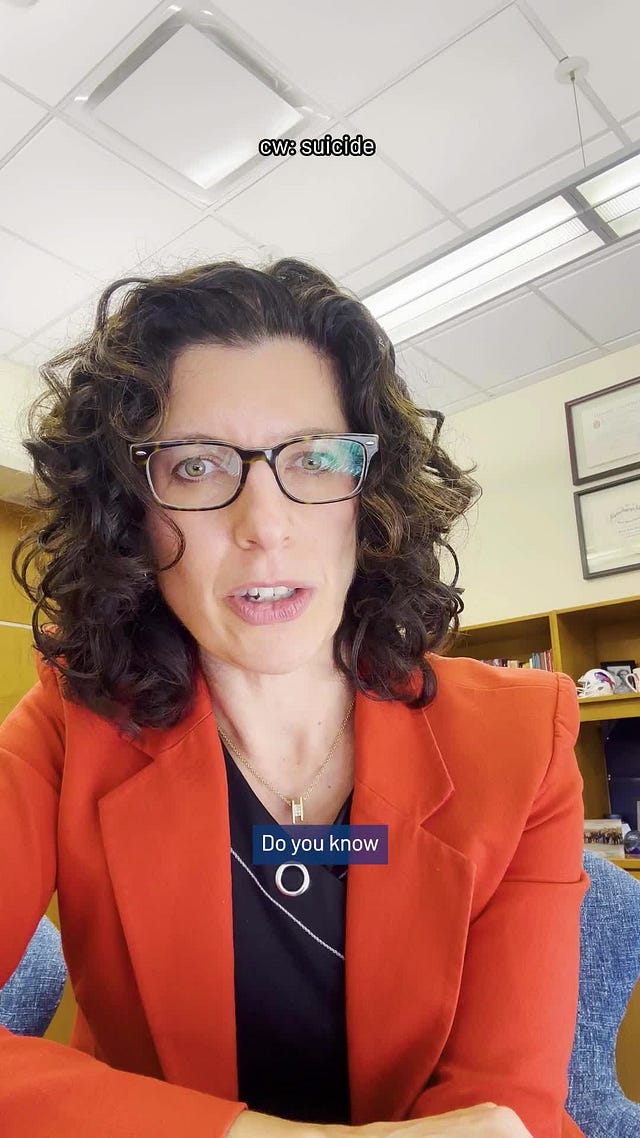
AY: There are many, many examples. One institution that is doing this really well, is Yale School of Public Health.1 Their Dean, Meg Ranney, has really invested in this and practices it herself. So as a consequence, the institution is making clever investments in how they’re elevating their faculty.
 Tiktok failed to load.
Enable 3rd party cookies or use another browser
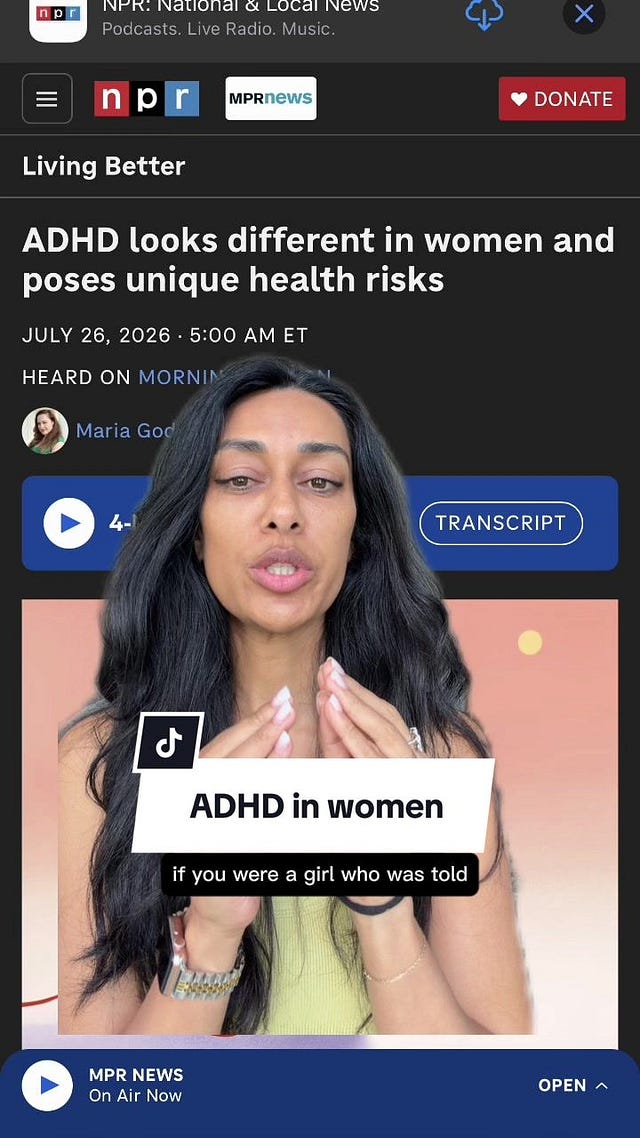
For creators, too, I could name hundreds. Sasha Hamdani2 is a psychiatrist specializing in ADHD. And she also has ADHD herself. So she talks about both her clinical experience and how she has experienced a diagnosis like that herself. She’s not afraid to talk about the messiness that comes along with that, so it’s allowed her to have a lot bigger impact than if it were just a dry, clinical thing. She’s also increasingly thoughtful about her role beyond that, and is speaking to policy issues about how we could better serve communities.
 Tiktok failed to load.
Enable 3rd party cookies or use another browser
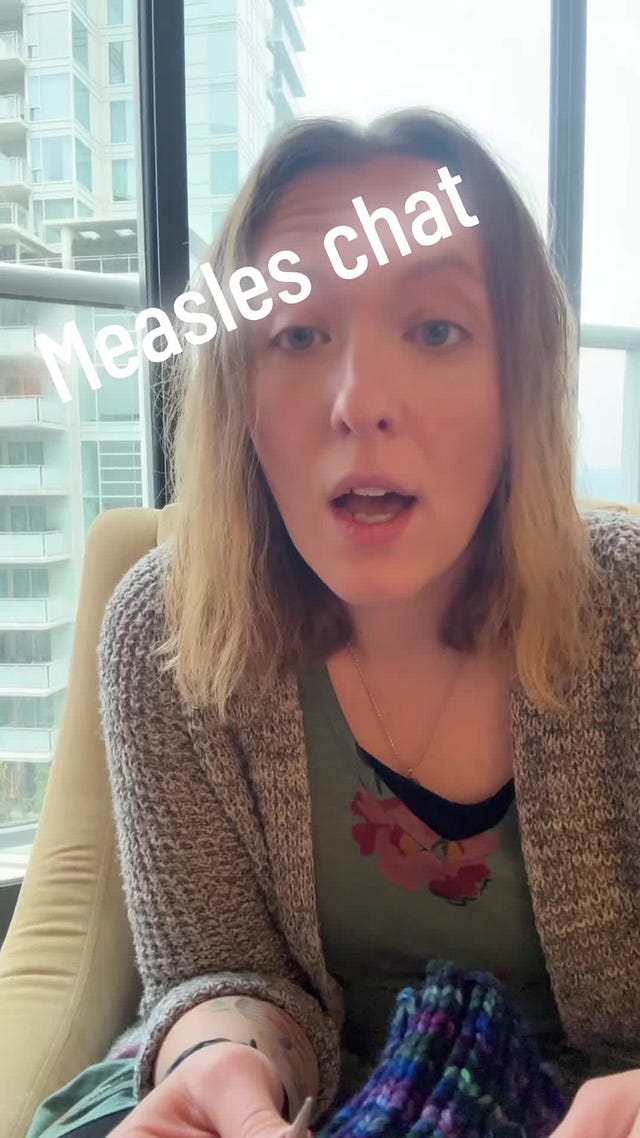
Another example is Liz Marnik,3 who is an epidemiologist by training and doing some of the most interesting vaccine education. Again, she speaks from expertise as an epidemiologist and her own lived experience, growing up in a vaccine-hesitant family and growing up unvaccinated.
 Tiktok failed to load.
Enable 3rd party cookies or use another browser
In public health, there's a long history of engagement at the in-person community level. Now, we live in a world where the community that is most important to somebody may not be physical at all. It may be digital.
JW: Is there anything else that you would like to share about digital communication and public health?
AY: Maybe two of my dreams.
JW: Yes please!
AY: One is that we invest in infrastructure that helps creators do this work. We don’t just expect them to do it themselves, which is insane, honestly.
The infrastructure would look like convening creators and giving them evidence-based resources. Creators are excellent at a lot of things, but they’re always looking for more evidence-based ways of having the kind of impact that they want to have.
The second is helping creators make that work. It has to be financially and personally sustainable. You have to feel like platforms care about you the tiniest bit, that they’re not letting other people deepfake you or something like that. And you have to be able to find ways to support it financially. So you don’t have to resort to a brand deal that doesn’t fit your values, and maybe find ways to work with institutions.
We have the opportunity to pilot and research the value of doing that. But for it to be successful, it would have to make it into the world.
◾
Thank you, Amanda Yarnell, for our conversation! You can follow Harvard T.H. Chan School of Public Health on Instagram, TikTok, and YouTube. ◾