

Last week’s blue wave in the US midterms was a referendum on many issues. It also sent a strong message to the tech industry. From AI replacing jobs to data centers invading communities and tech bros trying to buy votes, people are pushing back against Silicon Valley’s power over their lives.
Of course, the link between tech and politics is nothing new. There’s long been a revolving door between Washington, DC and the Bay Area.
In fact, techies and politicos are more similar than you might think – both are typically well-educated, ambitious sets. Many start as young idealists wanting to change the world, and inevitably seek rewards after paying their dues. Over the years, I’ve seen so many post-exit tech colleagues chase new meaning by running for office or starting nonprofits. And vice versa, many government and campaign operatives gravitate to corporate roles that are more lucrative than public service.
Once you notice the political hire whiplash in Silicon Valley, it’s hard to unsee it. I’ve experienced this myself at Uber, where within a few years I worked for both David Plouffe (Barack Obama’s former campaign manager) and Jill Hazelbaker (John McCain’s former spokesperson).
It makes sense that tech companies hire people with political backgrounds. They operate in environments that are either already highly regulated (see: fintech, healthtech) or are poised to become highly regulated (see: AI). That’s fine. But it’s a problem when political strategy spills into tech governance.
Take Meta, for example. The company is one big Lesson Learned of what can happen when government relations interfere with product design. Its product policy teams sit within the broader public policy organization. I used to joke that this was for semantic efficiency – both functions include the word “policy” after all. But in seriousness, it was never clear to me whether everyone at Meta actually understood the difference between “public policy” and “product policy.”
And right there lies the problem. Because public policy and product policy serve fundamentally different purposes.
Public policy teams – also called government relations (GR) – are responsible for protecting the company’s regulatory interests by managing its political relationships. Whereas product policy teams are responsible for developing the rules that govern how the platform actually works. That includes what speech is allowed, what’s considered problematic, and how to manage content that gets flagged for review.
The line between the two gets pretty blurry when the people responsible for setting the platform’s rules report into those responsible for managing its political relationships.
It’s well-documented how Meta’s political priorities influence its content policies. And having worked on product and public policy at Meta during the first Trump and Biden administrations, it’s a tension I know all too well:
Scenario #1:
Concerned about appearing politically biased against Republicans, I was asked to back out of a workshop teaching senior citizens in Florida how to spot potential misinformation.
I went anyway.
Scenario #2:
Meta’s nonprofit partnerships for the COP climate conference triggered multiple, fiery debates over proposed messaging that included gas cookstoves as harmful to the environment.
I lost that fight, and cookstoves were scrubbed from the content.
Scenario #3:
During routine annual planning for my nonpartisan information ecosystem program, I was told that continued funding would depend on “who is sitting in the White House next year.”
The program lost its funding, and I left the company in 2024.
I wish these were hypothetical examples, but alas they’re decisions I witnessed being made over and over throughout my years at the company. At Meta, virtually every issue – even seemingly benign ones – became a political calculation. That’s no way to govern a platform used by billions to find critical information for their lives.
Of course, public policy plays an important role in company decision-making. That’s standard risk management, similar to other advisory functions like public relations and legal.
But when government relations dominate product decisions, we end up with tech products that are as fickle as politics: inconsistent, unclear, and hard for people to trust.
◾
Which brings me back to last week’s elections.
It makes me laugh to think of Meta reversing course, pretending that they were never MAGA and that they truly care about misinformation and safety. Really, they do. They’re sorry, ok?
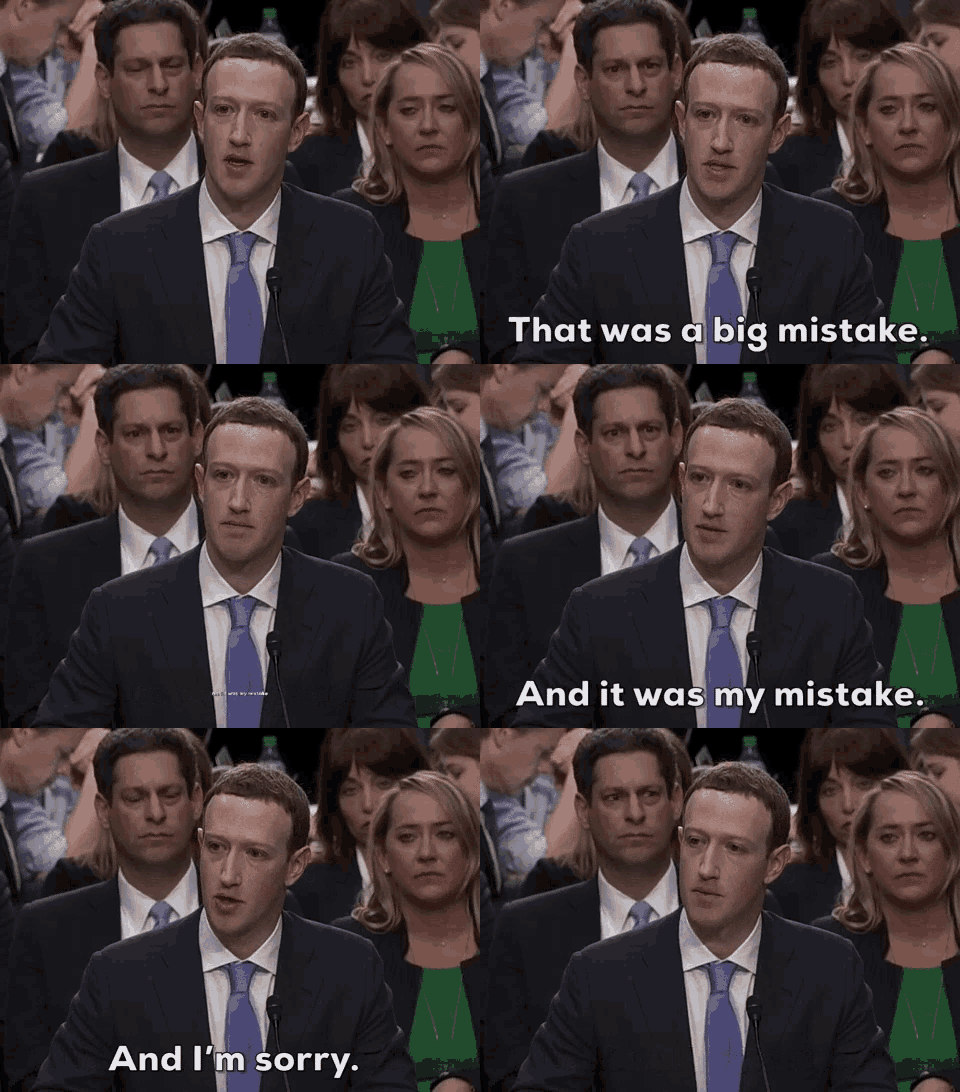
Perhaps they’ll reverse cuts made during the Trump administration. Maybe fighting misinformation and supporting trust and safety will become priorities again. I hope so.
But that won’t fix the underlying issue. It’s not progress to just swap out politically motivated decisions we dislike for ones we agree with now. It’s just another turn of the same cycle.
It is never in a company’s interest to design their products or policies in any political figure’s image. Because once the political tides change – and they always do – they’re left scrambling to ask for forgiveness and reinvent their principles. For a company as consequential as Meta, this lack of foresight is inexcusable.
Good governance requires something more durable. It means knowing what you actually stand for as a company, and building the structures to uphold those principles – regardless of who holds political power or how much they try to pressure you.
Because a company’s resilience isn’t about being pals with the current administration. It’s about being true to your users, no matter who’s in the White House now, or in four years, or in eight years. ◾
Keep it simple…. too much money unleashes the worst in greedy people
You're such a great writer. And I couldn't agree more with your point.