

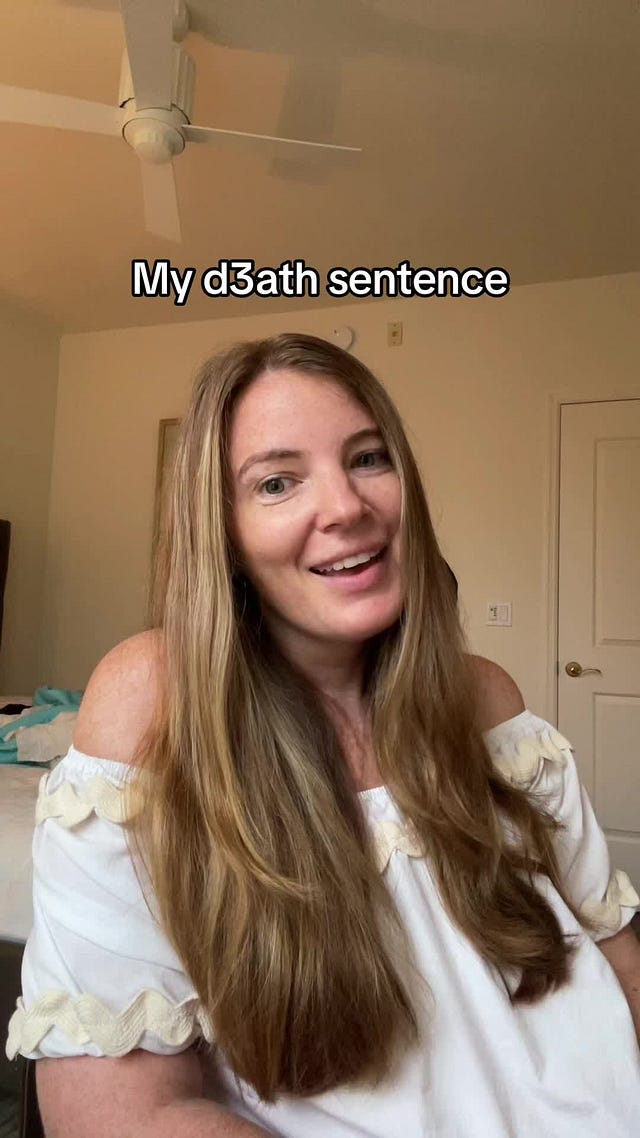
“Okay, we’ve gotta live life in dog years here. Like, if I’m being told two to five years, we’ve gotta make every one of those years worth seven.”1
Brooke Eby, one of the most talented creators I’ve seen, died last Thursday from complications from ALS.
 Tiktok failed to load.
Enable 3rd party cookies or use another browser
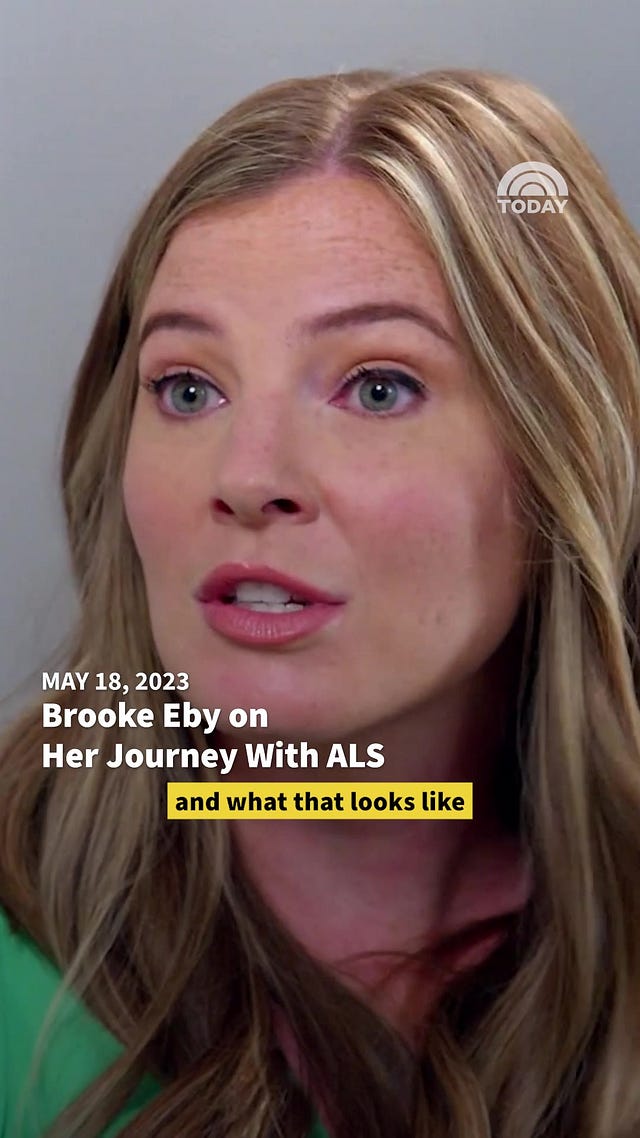
Years ago, Brooke was one of the first people I followed on TikTok. For many reasons, she was a compelling storyteller. Diagnosed with ALS at age 33, she was young. She also had incredible hair. And she was hilarious. Brooke spoke often about using humor to help connect with people despite the scariness of her illness.
 Tiktok failed to load.
Enable 3rd party cookies or use another browser
Brooke is being celebrated, rightfully, as a powerful advocate for ALS awareness and a community-builder for people affected by the disease. But she did more than that. Brooke showed us something important about how health information is being shared and interpreted in the digital ecosystem.
When I speak with health experts about participating online, conversations usually turn to the need to correct misinformation. That’s critical, of course. But framing health information simply as accurate versus inaccurate misses the deeper reasons why people turn to online spaces and alternative messengers in the first place. Many are looking for something that they’re not getting from mainstream medical sources: lived experience.
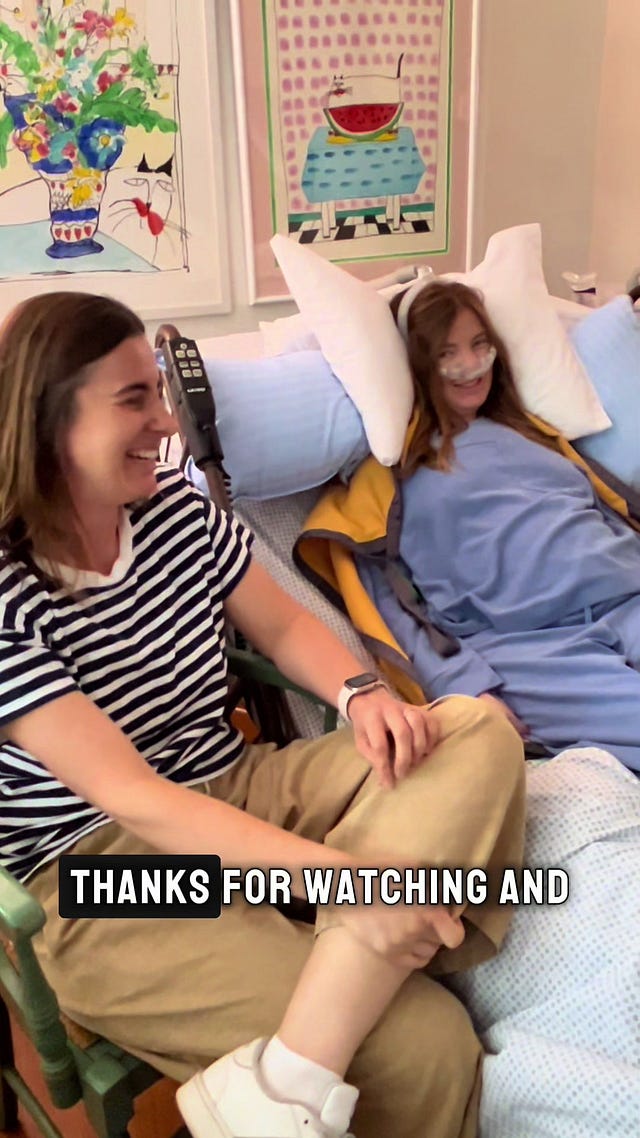
Brooke – like other creators sharing their journeys through illness online – helped people understand the patient experience beyond treatments and research. She shared everyday life moments like telling first dates about her cane, continuing to work, and coping with fear as her disease progressed. Brooke and her family opened themselves up to strangers and answered their questions with remarkable candor through what I imagine were some incredibly difficult moments. She was generous, and brave as hell.
 Tiktok failed to load.
Enable 3rd party cookies or use another browser
The digital ecosystem is creating space for different kinds of health messengers; lived experience now goes hand-in-hand with clinical expertise. Both kinds of knowledge are needed, and help patients and families navigate difficult circumstances and decisions.
That’s what Brooke gave us: the human experience alongside the evidence. As one of the hundreds of thousands of people she reached, I’m grateful she did.
◾
Learn more about ALStogether, an online community Brooke founded for people affected by ALS. You can find Brooke’s content on TikTok and Instagram. ◾
Brooke Eby (TikTok), 2026.
1000% My mom died from ALS and I only discovered Brooke after her passing. I wish I had known before because we are a family of doctors and we were paralyzed with helplessness. It's a horrid disease.