

Five years ago, as COVID-19 was shutting down the world, Mark Zuckerberg committed to give the World Health Organization (WHO) ‘as many free ads as they need’ to amplify vital public health information on Facebook and Instagram. I got called in to help design and execute that program, which supported not just the WHO but other UN agencies, government health officials, and nonprofits around the world. We reached over two billion people in 180 countries, and tangibly increased public interest in the COVID-19 vaccine. In the end, the effort took three years, hundreds of millions of dollars, and countless hours of hard work from Meta staff, public health experts, and creatives.
Today, a single doctor can build similar (if not more) trust, using just her phone.
This shift is happening everywhere: in public service sectors as well as commercial ones. By turning the camera on themselves, creators are bypassing the limits of institutional risk aversion and corporate energy. Instead, they’re embracing the hallmarks of what people trust today: humanized, unpolished, and emotionally authentic messaging.
Here are the patterns I see among the most effective medical creators:
Some specialty areas are natural fits for social media
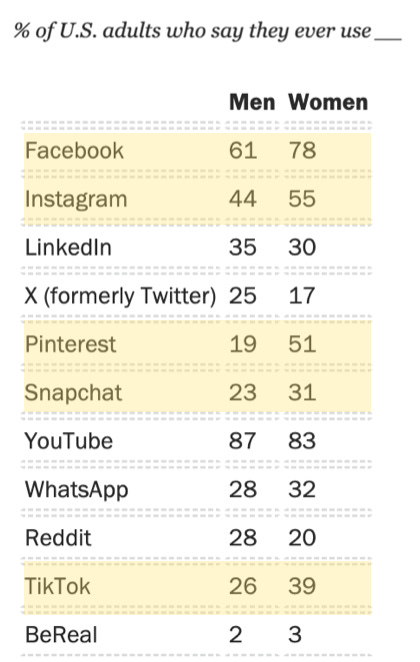
Beauty has become one of social media's biggest categories, from Instagram reshaping fashion to social platforms now powering billion-dollar skincare businesses. These phenomena make sense, as women dominate men on almost all platforms, and digital commerce now drives over half of beauty sales globally.
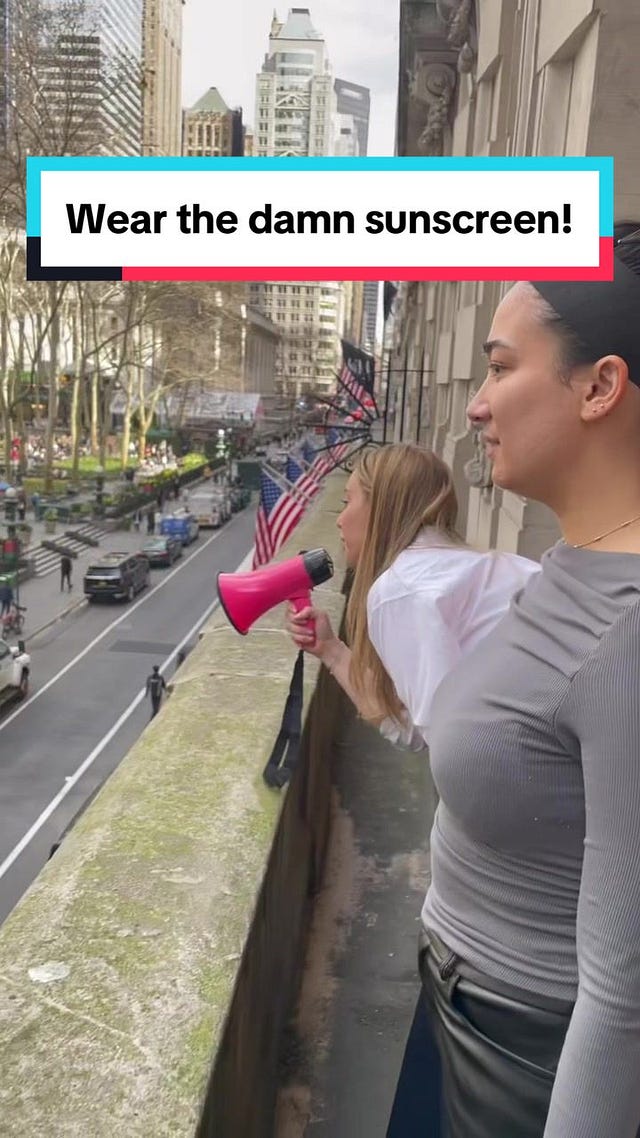
With so many consumers already engaging online, it’s a clear strategic move for beauty-adjacent health experts to meet them there. For example, dermatologists like NYC-based Dr. Shereene Idriss (1.4M IG / 1.6M YT) and Dr. Andrea Suarez, based in Houston and known online as Dr. Dray (600k IG / 2.5M YT) have amassed huge audiences by incorporating medical information into the cultural zeitgeist and shouting at us to wear the damn sunscreen.
 Tiktok failed to load.
Enable 3rd party cookies or use another browser
As one of social’s biggest categories, beauty is also a crowded space. With over 1.5 million beauty influencers in the US alone, people have a lot of choice in whose advice they want to follow, from enthusiasts to makeup artists to facialists and scientists. It goes without saying that medical creators will not reach everyone online. And that’s ok. Just like in life, one person may go to a spa for a chronic skin condition while another goes to a surgeon for something that can be addressed with makeup. We can’t change human nature, but we can give people more and better options for informing themselves.
Topics that are both urgent and taboo
On the other end of the spectrum, social media is giving space to medical topics that are considered too niche, embarrassing, or uncomfortable to talk about openly.
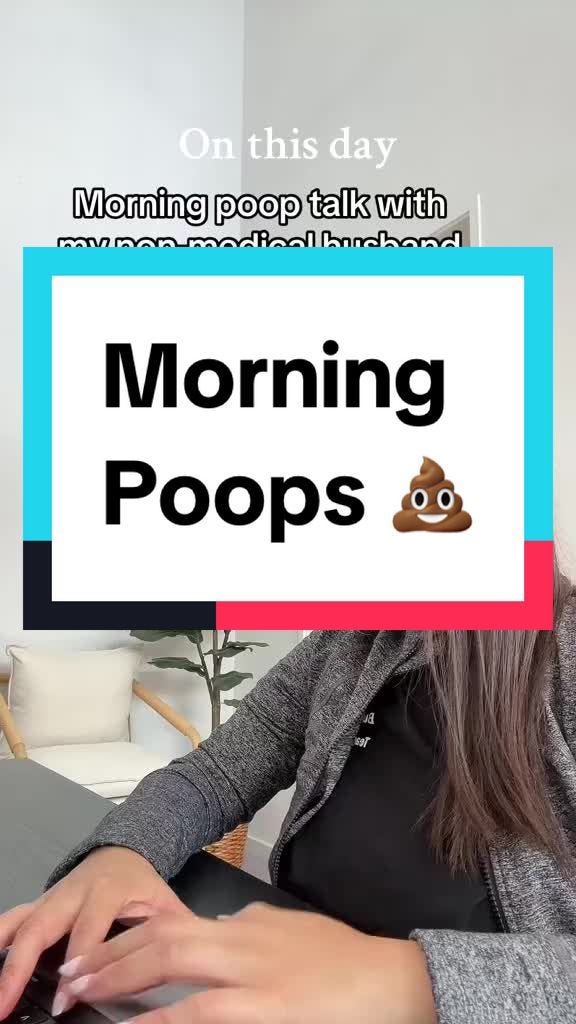
By this, we mean everyday health issues – things like periods, poop, perimenopause, and even death. And yet, these topics are systemically overlooked – either because they are deeply individual, rooted in shame, or considered socially taboo. With delayed treatment having potentially fatal implications, it’s all the more vital to meet people where they are and reduce stigma. And peer-to-peer media, with its simultaneously anonymous and intimate qualities, plays a critical role in normalizing conversations that our ‘real life’ social circles often don’t want to have.
 Tiktok failed to load.
Enable 3rd party cookies or use another browser
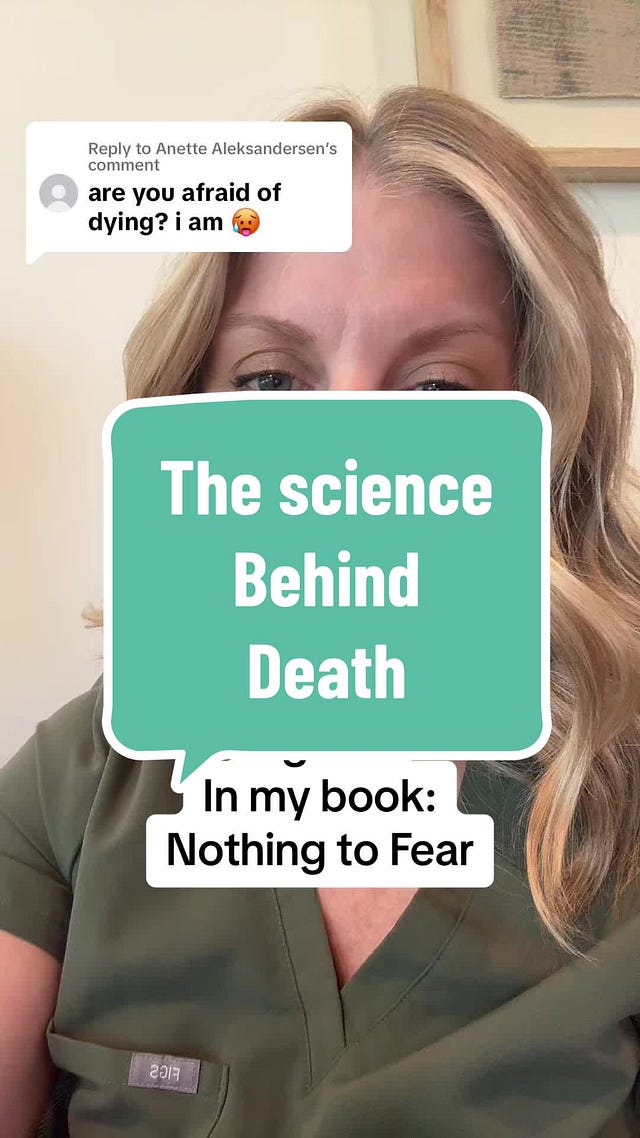
Another striking example is the wave of hospice nurses coming on social media to educate the public about death, reduce fear, and support people experiencing loss. One of the best known creators in this space is California-based Julie McFadden, known online as @hospicenursejulie (479k IG / 1.7M TT). As her engagement has grown, I’ve been impressed by how respectful her comments sections have remained — even as platforms repeatedly remove her educational videos for supposed guidelines violations. Unfortunately, heavy-handed content moderation is a problem we continue to see on multiple legal health topics that platforms deem problematic, including reproductive care as well as end-of-life education.
 Tiktok failed to load.
Enable 3rd party cookies or use another browser
Know your people, know your platform
The most effective medical creators know that good information only counts if people actually absorb it. They understand that different platforms serve different purposes, and optimize their content accordingly.
This kind of creator literacy isn’t rocket science (or medical school). Bad actors mastered the craft of engaging people long ago, and convinced many of us that trustworthy content can't do the same. That's wrong. The key is understanding your audience, and matching your content strategy to your goals.
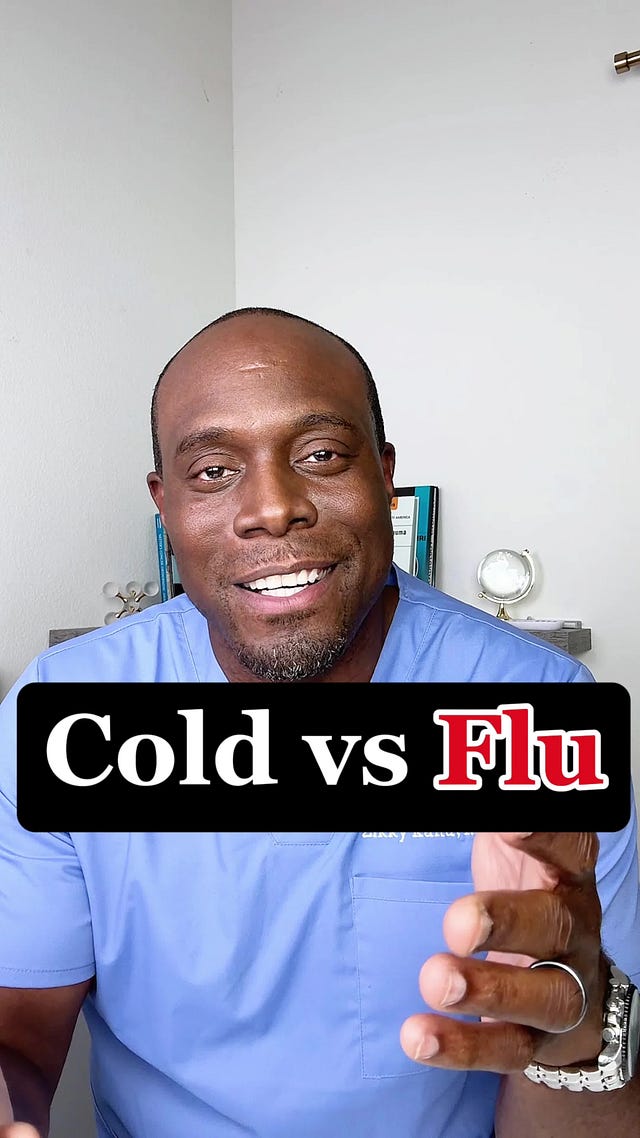
Someone who does this very well is Dr. Okezika Kanu, a Dallas-based doctor known online as Dr. Zikky (50k TT). For example, his video comparing the cold and flu demonstrates a thoughtful strategy to creating content for a discovery-driven platform like TikTok. He opens with a clear hook to quickly get the scroller’s attention, uses dynamic zoom-in and -outs for visual interest, and incorporates graphics that supplement detail. At 54 seconds long, the video covers a lot of ground and includes a final call to action.
 Tiktok failed to load.
Enable 3rd party cookies or use another browser
What makes Dr. Zikky's approach effective isn't just the format, but the strategy behind it. He understands that his audience isn’t necessarily looking for health information, but they might absorb it while scrolling. His content is quick and practical. It’s educational without feeling pedagogical. Authoritative but not intimidating.
At scale, effective health communication — or any topic for that matter — requires a portfolio approach. Examples like Dr. Zikky provide a glimpse of what could be possible with stronger collaboration between institutions and individual creators. Not competing for attention, but coordinating to reach different audiences where they are.
The doctor’s humanity makes her trustworthy
In a time when legacy institutions are losing public trust, one of the most powerful things a doctor can do online is to simply show up as a person.
That’s not easy. For generations, medical authority was rooted in emotional distance to project clinical objectivity; personal vulnerability was viewed unfavorably. But professionalism means something different now. Especially for people who have felt ignored by the health system, an institutional badge might be the very thing they don’t trust. A real person, by contrast, can still cut through.
That’s how creators like Dr. Elisabeth Potter (191k TT / 183k IG), a reconstructive plastic surgeon in Texas, have built such powerful followings. Dr. Potter shares what it’s like to run a medical practice, navigate insurance bureaucracy, and advocate for her patients. Her content has gained so much traction that the insurance company United Healthcare retaliated against her — jeopardizing her clinic and her ability to treat cancer survivors.
Even though Dr. Potter doesn’t post a lot of medical advice, her medical credibility still rings through. And her followers aren’t just passive watchers; they’ve taken real action to support her.
This is what the best medical creators understand: building trust can change behavior. And in an information ecosystem where there is so much noise, that trust — earned one post at a time — might be medicine’s most powerful tool.
The credibility playbook is changing
Medical creators are doing more than reshaping public health communication. They’re proving that it is possible to express expertise online in engaging ways, and that a willingness to connect authentically can be more powerful than institutional authority alone.
This has implications far beyond medicine. Every field has experts who could be communicating more authentically online. The challenge is figuring out how to do it strategically while protecting your personal boundaries.
There’s a lot yet to learn, but here’s what’s certain: to continue to thrive, institutions need to build communication agility as our information ecosystems evolve. It’s not about dumbing down expertise or replacing institutional roles; rather, we need to adapt to new structures and amplify unified messaging across channels and voices.
before you go…
Scrolling through
It’s not just doctors and nurses who post effective health content. Patients do too. Brooke Eby’s account, with so much candor and humor about her very serious experience with ALS, is easily among the most powerful ones out there. Follow her on TikTok or Instagram.
Tiktok failed to load.
Enable 3rd party cookies or use another browserStephanie Hinds wrote an excellent piece about the evolution of Netflix documentaries. Once hailed for serious work like Making a Murderer, they’re now leaning into a more formulaic (dare I say, algorithmic) approach — glossed up, over-simplified, and more in the image of Dateline than documentary film. With Ted Sarandos now touting the use of AI in production, it doesn’t bode well for the filmmakers and artists Netflix once courted heavily but no longer need.
TIME has launched its inaugural TIME100 Creators list. On one hand, it’s a sign that digital content is finally being recognized as a legitimate medium. But a cynic might see a legacy institution using the very people disrupting its influence to stay relevant. As is often the case, legitimacy and relevance go both ways.
and one more thing…
Happy place
Honoring Colorado Poet Laureate Andrea Gibson, who won last week. I’ve been aware of Andrea’s work over the years, but admittedly not deeply. Their passing has prompted me to take time to explore, and it’s been a joy to experience their poetry and observations about life, love, gender, and dancing.