

🎙️ Listen to the latest episode of Did You See? as we examine the media moments shaping culture. This week: Taylor Swift and Travis Kelce's wedding, the transatlantic culture wars over air conditioning, and America's 250th birthday.
Friends,
“The more often you hear something, the more likely you are to believe that it’s true.” That’s a line that Professor Candice Odgers repeats — twice, for good measure — in her recent TED talk, What we’re getting wrong about teens and tech.
Odgers is doing something many experts aspire to do: she’s changing public discourse. Correcting misconceptions. Adding nuance to a topic that has become oversimplified in the media and misunderstood by the public.
Watching her, I was reminded of my work at Meta partnering with public health experts, climate scientists, and elections officials. We spent enormous effort making content to debunk misinformation; or when we felt ahead of the game, we called it “pre-bunking.” But even pre-bunking meant reacting to and reinforcing someone else’s framing, rather than consistently advancing our own.
Odgers does something different. Rather than focusing on what she disagrees with, she centers her own message. And her talk doesn’t feel like a lecture, even though it’s rooted in years of research. She combines evidence with personal stories and a clear, memorable narrative. When she jokes about becoming the adult who judges teenagers for everything — from what they wear to why they aren’t partying enough — the audience laughs because they recognize themselves in her.
But changing public understanding takes more than evidence or good storytelling. As Odgers reminds us, it also takes repetition.
Many experts believe they need an original insight before they can contribute publicly. That may be true in some circles, but not in the digital ecosystem. There, change rarely happens because one person has a brilliant idea. Change happens because many people consistently reinforce the same messages until they become familiar.
That’s how public understanding shifts. And it’s something all of us can do — whether it’s by creating our own work online, or by choosing what we amplify through what we follow, comment on, and share.
After all, the more often we hear something, the more likely we are to believe that it’s true. So let's make sure the messages being repeated are ones grounded in evidence and informed by expert judgment.
◾
Below are other things I’ve been reading and thinking about this month.
And if you have a content piece to share or a favorite expert creator, send them my way by commenting or hitting reply. I’d love to include them in the next issue.
See you out there,

Did You See? with Jena and Michelle
🎙️ Did you see that Taylor Swift and Travis Kelce got married?
If you haven’t heard, Taylor Swift and Travis Kelce got married last weekend in NYC. Whether you’re interested in their wedding or not, the spectacle around it reveals a lot about celebrity performance, fandom, and what public figures owe the people who put them there. Michelle Ciulla Lipkin and I dig into it in our latest episode of Did You See?
Available on Substack or wherever you listen to podcasts.
News & Commentary
📝 Alan Alda’s solution to eroding trust in science: more improv
Wall Street Journal | ~ 5 mins read
Stony Brook University is teaming up with actor Alan Alda to offer improv workshops to help scientists loosen up the way they communicate and build empathy with different kinds of audiences. With participants ranging from chronic pain researchers to atmospheric scientists, there’s clearly demand for out-of-the-box approaches to rebuilding public trust. And there’s a lot to appreciate about the yes, and attitude experts are bringing to the challenge.
📝 The future of science communication is not an article like this
Nature | ~ 3 mins read
Nature is officially on TikTok, and doing a great job with their content. This editorial discusses the need to reach the public where they are and provide credible information to counter falsehoods online. But there's another, deeper significance to the move: it signals that short-form digital media deserves a place alongside more traditional forms of science communication.
📝 8 AI bots write 50% of X’s community notes
Indicator | ~ 7 mins read
When platforms like X and Meta shifted away from centralized content moderation, they argued that community-based models would help to reduce bias. How does that work if AI now writes half of Community Notes on X? AI can help with scale problems, but it can’t fill information gaps or eliminate bias where adequate source material doesn’t exist.
📝 The Filipino virtual assistants behind LinkedIn’s ‘thought leadership’ content mill
Rest of World | ~ 8 mins read
Executives are outsourcing their LinkedIn engagement to virtual assistants who draft posts, write comments, and help maintain the appearance of thought leadership.
This shouldn’t be surprising. On one hand, having a digital presence has become valuable enough to create an entire support industry around it. On the other hand, it raises questions about authenticity, even when AI isn’t involved.
📝 Decline of Ph.D. Admissions Could Imperil a “Generation of New Talent”
The New York Times | ~ 7 mins read
Some of the US' leading research universities are reducing Ph.D. admissions, in response to uncertainty around federal funding, which is increasingly becoming politicized. The immediate concern is on scientific research, but there will also be downward effects on undergraduate education and what the next generation of expertise might look like.
It’s another example of how external narratives have profound impacts on experts’ abilities to do their jobs. Turning that around will require more than a change in political leadership. It will require academic institutions to engage more intentionally with the public and rebuild trust from the inside out.
Expert of the month
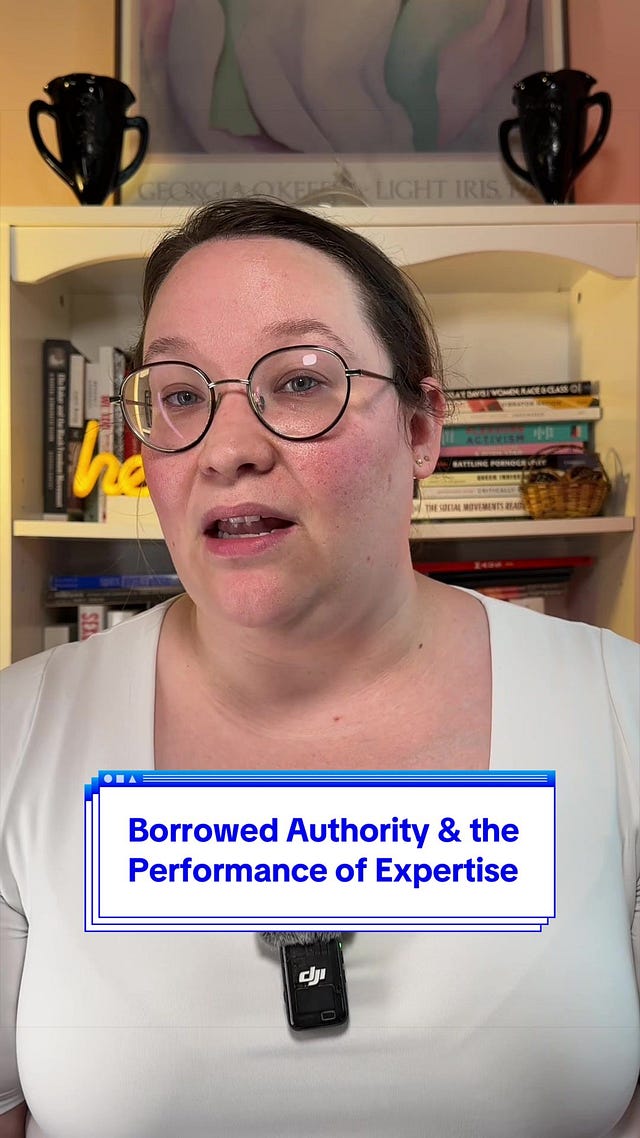
📚 Dr. Shawna | TikTok
The algorithm has recently started serving me Dr. Shawna’s content, and I’m so grateful for it. In her profile, she describes her content as “hot takes with citations,” and I’ve been watching a lot of her recent posts about credibility, credentials, and education access. For anyone who thinks that people don’t want to see complex content online, please note that Dr. Shawna has nearly 180k followers on TikTok. Let that sink in.
 Tiktok failed to load.
Enable 3rd party cookies or use another browser
Happy place
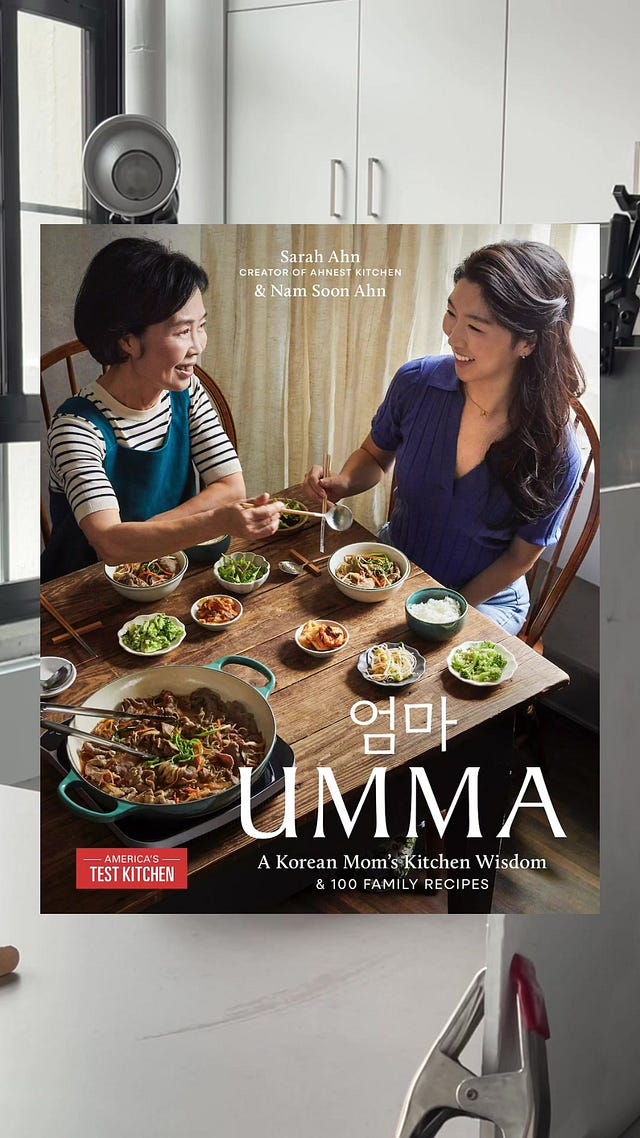
I’ve been following Sarah Ahn’s TikTok for a while, where she shares recipes and stories of Korean home cooking with her mother, whom she calls Umma. They recently won a James Beard award for their new cookbook, Umma. If you’re looking for a calming and heartwarming space online, check out their account. It’s about more than Korean cuisine — it’s a true celebration of home life, moms, and daughters.
 Tiktok failed to load.
Enable 3rd party cookies or use another browser