

Friends,
It’s been quite a month back in the US. Wherever you’re reading this, I hope you’re finding moments of peace in these overwhelming times. I’m taking a quick study break to share the pieces I’ve been reading, and how the latest events may prove to be a watershed moment for the global information ecosystem.
Breaking news is always a messy time for media, both traditional outlets and peer-based platforms. The horrific assassination of Turning Point USA founder Charlie Kirk magnified that for many reasons — including the fact that he was a skilled and prolific creator, a social media staple to young Americans across the political spectrum.
For the most part, the response from public and political figures was pretty standard. Not quite ‘thoughts and prayers,’ but generic statements nevertheless: condemning political violence, mourning with Charlie’s loved ones and supporters, and calling for peaceful debate. This approach is understandable from a governance perspective; the US is facing a crisis of social division and political violence, and as many people are saying, the temperature must be lowered.
From an institutional trust perspective, however, the response missed the mark for many people. To them, its simplicity conflated performative debate with genuine discourse, and confirmed institutional naïveté about the digital ecosystem that millions of Americans live in. This disconnect is one of the fundamental challenges for institutions competing with individual creators for public trust, a dynamic that Charlie understood very well.
Here are some thoughtful pieces addressing this tension by Ta-Nehisi Coates,1 Moira Donegan, and Kahlil Greene.2
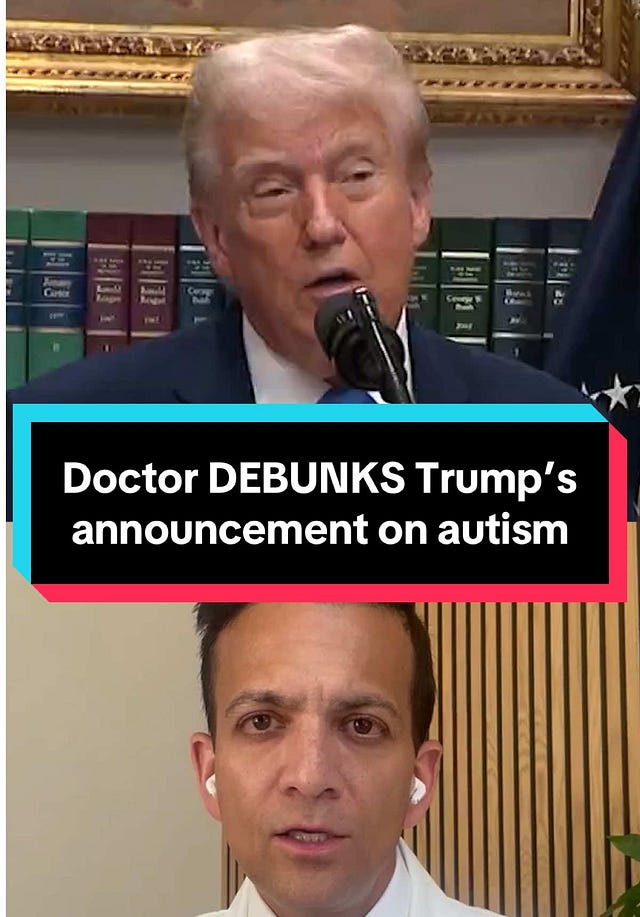
After Charlie’s death, I noticed a shift in President Trump’s communication. At the Tylenol press conference, he did something unusual. When asked about the American College of Obstetricians and Gynecologists’ statement that acetaminophen is safe during pregnancy, he said: ‘That’s the establishment. … And you know what? Maybe they’re right. I don’t think they are.’
 Tiktok failed to load.
Enable 3rd party cookies or use another browser
It was one line in a long presser, but it stood out. Trump, normally absolute, conceded the possibility of being wrong. It was a flicker of ambivalence even as his health secretary insists on a firm link among vaccines, medications, and autism.
It’s one thing when a leader shares unfounded information because they believe it. It’s another altogether when belief no longer matters. When that happens, the ecosystem degrades not just into misinformation, but into meaninglessness. The message matters less than the act of speaking — with actual conviction reserved for political or personal gain, rather than public service.
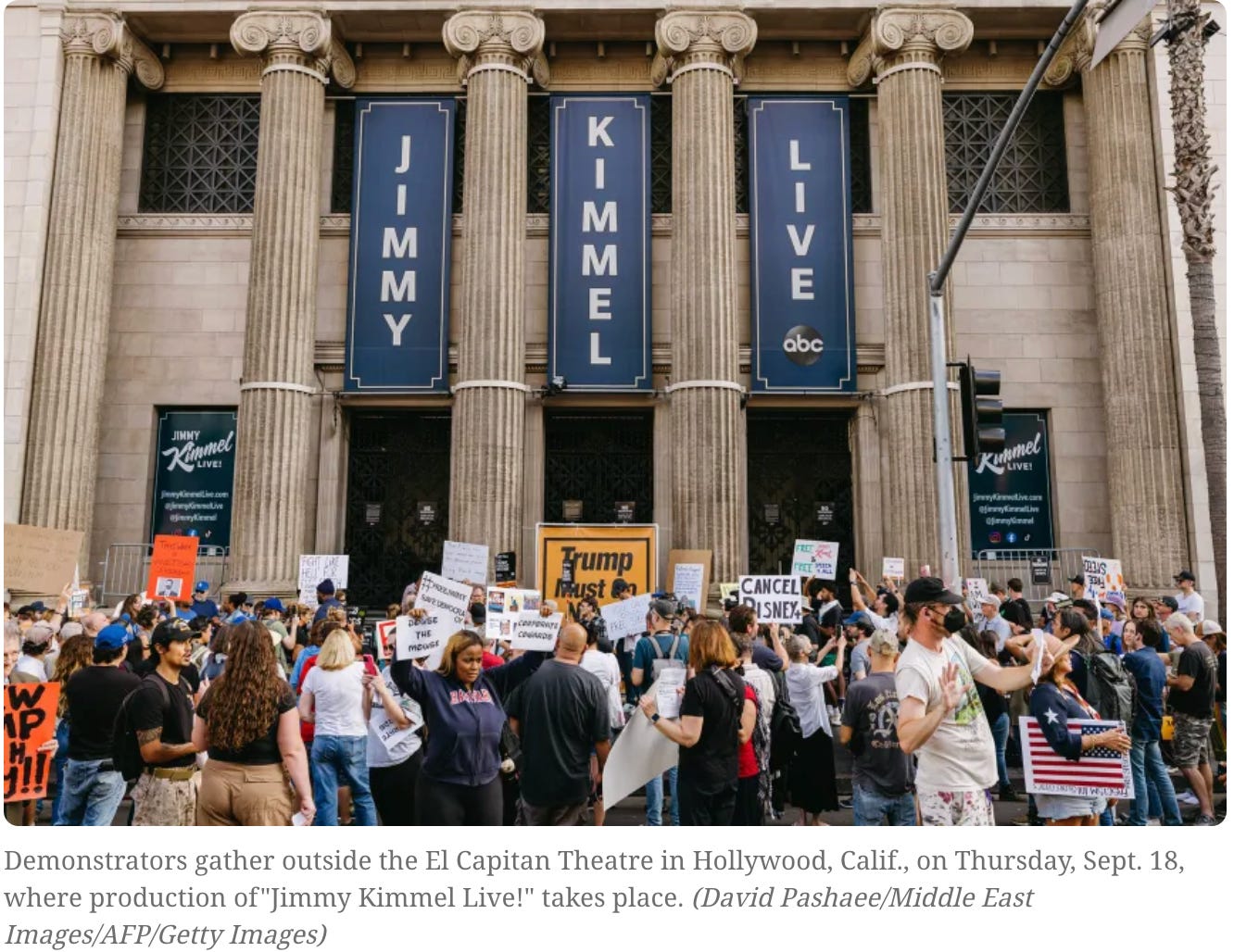
In real time, we’re seeing that conviction affect career public servants, businesses, philanthropists, and of course, media. ABC’s suspension of Jimmy Kimmel Live! was shocking but not surprising. In the short lifespan of Feed for Thought, I’ve already written about both the decline of late night and Jimmy’s own defiance of his network’s political challenges.
The show went back on the air after a week, but let’s be honest: all of the late night shows will probably go dark when current contracts end. The hosts — Stephen Colbert (whose show will end next year), Jimmys Kimmel and Fallon, and Seth Meyers — will be fine. They will almost certainly transition to independent content through podcasts, digital programs, books, or tours. It’s a path well-trodden by other network alums to great success.
Audiences will be fine too. They’ll still be able to access their favorite hosts-turned-creators’ content and commentary — most likely with fewer guardrails and greater convenience.
 Tiktok failed to load.
Enable 3rd party cookies or use another browser
The people bearing the brunt of these changes are the shows' staff, vendors, house bands, and production crew, whose jobs are already being impacted by AI and an ever-democratized media landscape. Media’s shift towards individual creators is a business reality accelerated by technology and politics. But as traditional media fragments, the economic collateral damage falls on the skilled workers who once anchored the industry.
Beyond late night’s shifting economics, there’s been a larger reshuffling of financial flows in the digital ecosystem as well. Though met with surprisingly little fanfare, it will be far more consequential: the US approved a deal with China on TikTok.
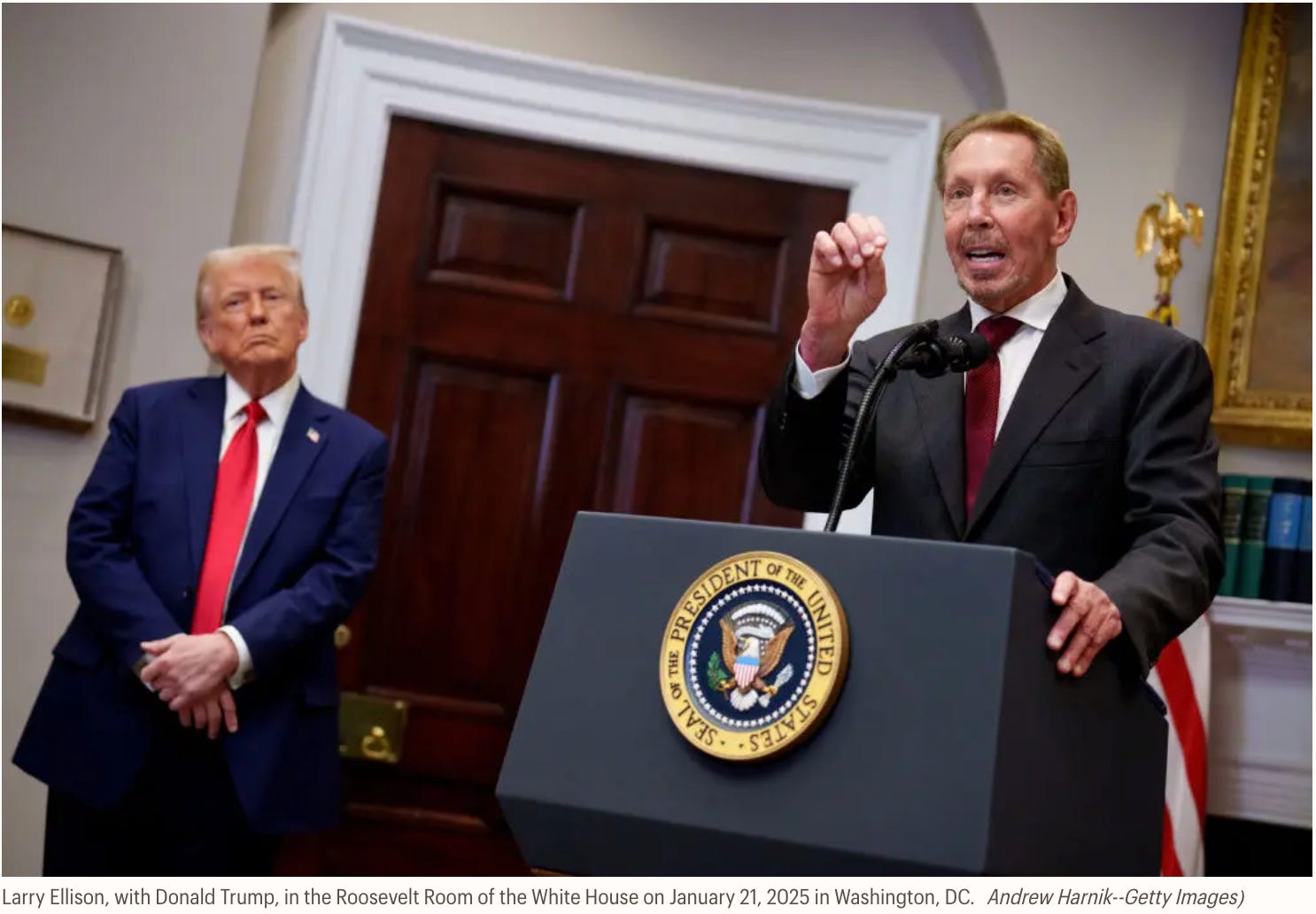
The deal’s biggest winner is Larry Ellison — Oracle cofounder, occasional world’s richest person, and father of David Ellison (the owner of Paramount Skydance… sound familiar?). Oracle already handles TikTok’s user data in the US, and now Larry is also becoming an investor as part of the ownership changes. He joins the Murdoch family and other Trump allies on TikTok’s cap table.
The TikTok debate originated around national security, but as I’ve written elsewhere, we’ve yet to clarify major questions about data security and control.
And from an information ecosystem perspective, these changes should be ringing alarm bells. Considering the administration’s efforts to punish critics (see Charlie) and control media (see Jimmy), it’s not hard to foresee a potential attempt to influence the content decisions, moderation standards, and algorithmic updates on an app widely understood as a place for young and underrepresented people to express themselves.
With the heads of Facebook, Instagram, X, YouTube, and now TikTok inching closer to full-on alliance with the administration, the media fragmentation I predicted may come sooner rather than later. Communities will move to smaller, curated, and safer-feeling places. In the short term, these will probably be hosted on platforms like Discord, Patreon, Substack, and Slack. But no doubt, we’ll see new startups from all over the world popping up to fill this need.
For the future of information quality and public trust, it’s time for institutions and subject matter experts — primary sources, as Jon Stewart and Trevor Noah say3 — to claim active roles in the information ecosystem that’s taking shape around us. It’s uncomfortable, but it’s also our responsibility as stewards of knowledge to contribute to information readiness.
We must get comfortable with participating in modern media. We can learn together. Are you with me?
Ta-Nehisi’s piece was written partially in response to an op-ed by Ezra Klein, which was published on NYT Opinion the day after Charlie’s death. More recently, they spoke about their different approaches on Ezra’s podcast.
Thanks to subscriber and fellow Substacker Michelle Ciulla Lipkin for sharing with me Kahlil’s excellent newsletter about the history of marginalized communities!
Love this piece!
The fragmentation of the media ecosystem is coming fast, for sure. How do you see the AI platforms fitting in?