

🎧 Listen | 4:01 mins
Friends,
I’ve been thinking a lot lately about technology and kids. You might have too, after the recent court rulings that held Meta and Google responsible for harming youth.
I have some experience with how the tech industry approaches child safety. I helped launch Uber’s first product for teens. At Meta, I developed digital literacy curricula for teachers. Recently, I worked with parenting creators to help with family discussions about tech.
Child safety is one of the hardest issues I’ve worked on. It’s emotional, and the stakes are high. While we know logically that no one can prevent every bad thing from happening, there’s also never enough you can do to keep kids safe.
Tech companies know this — and they also know that they’re not child safety experts. That’s why it’s common practice to work with organizations like the National Center for Missing and Exploited Children, ConnectSafely, and Family Online Safety Institute, among others. These kinds of partnerships can include informing product design, developing learning resources, and hosting community events. I also worked regularly with law enforcement, privacy advocates, educators, and parents’ groups to try to get as many perspectives at the table as possible.
As I reflect on that time though, I’m realizing how often youth themselves are sidelined in these discussions. It’s because — at least in my experience — parents are the customers of kids’ products. They’re the ones paying for it and deciding whether to use it. It’s the same dynamic for policymakers: parents are the voting stakeholders, not their children.
That explains why so much focus on online child safety has centered on building features for parents. We call them parental controls — tools that let parents monitor their children’s online activities and set limits.
But if the goal is to actually improve things for youth, is that the right approach?
I recently revisited an excellent essay, We’re Not the Anxious Generation, by Columbia student Maximilian Milovidov. He argues that discussions about technology often overlook young people’s lived experiences. His generation is growing up through a pandemic, school shootings, climate anxiety, and eroding institutional trust. So the phone may be a mirror of a broken world, not the sole cause of it.
Milovidov asserts that young people aren’t passive victims, either. They’re artists, organizers, and coders. They use technology to build movements and find communities that their towns and schools can’t provide. During the pandemic, digital platforms were a lifeline for many of them — especially for queer and neurodivergent youth.
He challenges adults’ instinct to control teens’ behavior. Authoritarian approaches like bans may actually increase risk, he says, by pushing youth into underground spaces. Or silencing them if they go around rules to access something online, and then need help.
We’re not the anxious generation, he writes. We’re the ignored generation.
Milovidov suggests that adults engage with youth about these issues, instead of talking about them. Control doesn’t teach resilience — conversation does.
I’m certainly up for one. Are you?
◾
Below are other things I’ve been reading and thinking about this month.
Do you have a content piece to share or a favorite expert creator to highlight? Send them my way by commenting or hitting reply. I’d love to include them in the next issue!
See you out there,

News & Commentary
📝 The stark divide in the UAE and India war info systems
Rest of World | ~ 3 mins read
Indranil Ghosh, an Indian journalist in Abu Dhabi, describes the different information ecosystems in the United Arab Emirates and India upon the start of the war in Iran. Both countries use WhatsApp for messaging; both governments took measures to restrict misinformation. But Ghosh’s experiences vary widely between the two countries.
It’s a reminder that technology is just a tool, whose usefulness often relies on how humans use it.
📝 ChatGPT Health under-triaged half of medical emergencies in a new study
NBC News | ~ 4 mins read
A new study in Nature Medicine found that OpenAI’s health-focused chatbot under-triaged over half of medical emergencies. It often recommended a doctor’s appointment when patients needed the emergency room.
There’s no doubt that AI holds great promise for easing provider workloads and expanding access to care. But being able to pass medical exams is not the same thing as practicing medicine. Expertise is more than knowledge; it’s judgment shaped by context.
📝 AI exposes where learning was thin to begin with
Inside Higher Ed | ~ 5 mins read
Xinyao Yi, an assistant professor at the University of Virginia, describes how AI is revealing longstanding weaknesses in teaching. She asks whether educators have focused too much on accuracy while underweighting students’ actual understanding.
Yi hasn't banned AI from her classroom, and shares how she now assesses reasoning along with correct answers.
📝 Cursive is back. But should students be learning the skill?
NPR | ~ 5 mins read
Sherisse Kenerson, a middle school teacher in Virginia, started an after-school cursive club when she realized her students couldn’t read her handwriting on the board. Cursive was omitted from the Common Core standards in 2010, and some call it a waste of time and effort since print and tech are easily available.
But the kids don’t care about that (and neither do I). They just like it. One student feels proud to be the only person in her class who can read the Declaration of Independence, which I find lovely.
Even in a digital age, kids still appreciate pencils. It doesn’t have to be one or the other.
📝 A UC professor won criminology’s highest honor. Americans still don’t believe her research.
San Francisco Chronicle | ~ 7 mins read
UC Irvine Professor Charis Kubrin is receiving her field’s equivalent of a Nobel Prize for two decades of research showing that immigration does not increase crime. Yet, 57% of Americans believe the opposite, which has made it easier politically for the US government to enforce anti-immigration policies.
Kubrin aims to get her research to policymakers, and hopes it won’t languish in journals. I hope not too. But research alone doesn’t translate into public belief, and policymaking is based as much on politics as it is on evidence.
If you don’t have a San Francisco Chronicle subscription, you can read more about Kubrin’s honor and work here.
🎥 Louis Theroux: Inside the Manosphere
Netflix (trailer) | 1:31:20 watch
British documentarian Louis Theroux has built his filmography around exploring subversive cultures. So it’s not surprising for him to dig into the world of manosphere creators, who promote extreme views of masculinity and gender roles — mostly to vulnerable young men.
The film reinforces that these creators are more businessmen than ideologues. It’s a world where everything is a transaction, and everyone leverages each other to their own benefit. Even the ethics of Theroux’s documentary itself comes into question in this regard.
Experts of the month
✍️ Cutaway Notes | Public Health Matters
In What If We Treated Femicide the Way We Treat Heart Disease?, Cutaway Notes argues that femicide is a preventable public health crisis. Viewing it as a crime often leads to late intervention. However, seeing it as a health issue allows for screening, education, and early warning tools.
What stayed with me is how straightforward implementation could actually be. A standardized screening question at annual checkups. A high school health unit. The Danger Assessment Tool in a pharmacy. The infrastructure exists, but we often choose not to use it.
Also, check out my interview with Cutaway Notes about her experience writing Public Health Matters.
✍️ Joanne Schneider Demeireles | A little woo
Joanne Schneider Demeireles is a healthcare executive and former women’s health founder who writes about why smart patients are questioning medicine, and the tension between institutional authority and lived experience. She’s lived both sides — building health systems and being failed by it as a patient.
In The Problem with ‘Trust the Science,’ she argues that the phrase has become shorthand for trust in institutions and policies, even as science inherently evolves. And when evidence gets presented as absolute, patients who ask questions or push back get viewed as difficult — rather than curious or engaged.
The better frame is trust the process: being honest about what’s settled versus recommended, and understanding patients’ individual thresholds for uncertainty.
📣 Eugene Healey | @eugbrandstrat (IG, TikTok) | Considered Chaos
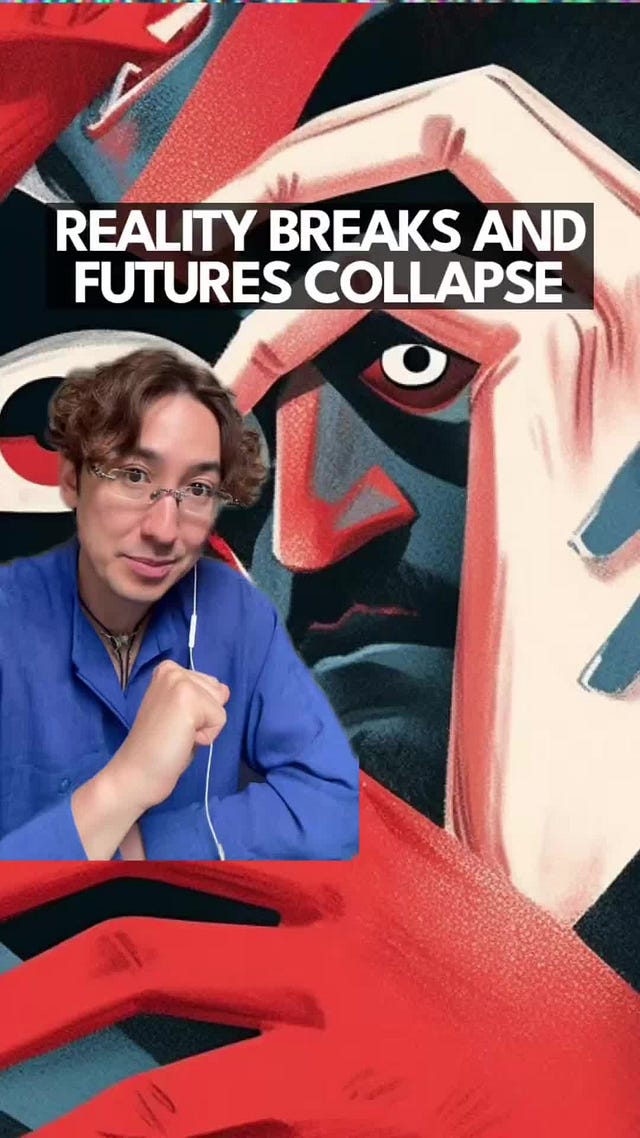
Eugene Healey is a brand strategy consultant and educator who’s built a big following for his sharp analyses of society through a brand lens. Though his work focuses on the private sector, many of his insights apply to public service fields as well. After all, we all aim to build trust and inspire behavior — whether it’s making a purchase or considering a vaccine.
This video essay stands out to me in particular. It’s nothing new that media shapes people’s understanding of the world. What’s new is how the growing dissonance between people’s lived and presented realities is driving them to tap out completely.
 Tiktok failed to load.
Enable 3rd party cookies or use another browser
Happy place
In honor of March Madness, the American college basketball tournament that just concluded, I’d like to highlight Coach Jackie J. Jackie tells stories about women’s sports, and is known for the tongue-in-cheek series, Is she gay or does she just coach women’s basketball? Amid all the politicized talk about women's sports right now, Jackie is a true advocate and fan.
You can find Jackie on Instagram or TikTok.
 Tiktok failed to load.
Enable 3rd party cookies or use another browser
I just read Maximilian's essay with my students on Tuesday!
As always, your takes are so thought-provoking and timely. I think a lot about the weird standard kids are perceived to have, as if they are not expected to be really involved in these conversations even though they're ironically the most involved in technology nowadays. Drawing a fine line for that is important, but control gives the opposite effect and shuns away opportunities for growth!