

Note: I want to be ultra clear that this essay is not criticizing motherhood or anyone’s personal choices about parenting. It’s about how today’s media environment is making space for women to share their stories with more nuance, complexity, and vulnerability than ever before. In a culture that can oversimplify motherhood and womanhood, this is a powerful and important shift.
Last time, I wrote about how #tradwives and manosphere creators mainstreamed an old-fashioned, oversimplified view of womanhood, motherhood, and gender roles. Coming out of the pandemic, corporate burnout drove a nationwide audience to #quietquit and seek escapism through the warm aesthetic and cozy-looking lifestyle of ‘traditional living.’ Although not overtly political, tradwife creators curated a nostalgia for a past that never really existed – a tactic not dissimilar to the Make America Great Again playbook. Together, these cultural and political forces made President Trump’s second election almost inevitable.
This week, I’m looking at how our digital pendulum has swung since January, and the powerful new wave of storytelling that women are leading online. They’re talking about motherhood, freedom, choice, and the grey areas that come with real, unfiltered life.
Space for the unheard
Social media’s roots are in giving space to voices that don’t fit the mainstream. The powerful and elite were late to social media because they didn’t need it; they were already all over traditional outlets. We saw this pattern over and over throughout the 2010s and early 2020s — from Occupy Wall Street's protest against corporate greed, to #MeToo’s call for healing for sexual violence survivors, to Black Lives Matter's mobilization to fight systemic racism and police brutality against Black people. Digital platforms gave everyday people a collective voice and a way to organize, eventually crossing over from our online worlds to our physical streets and ballot boxes.
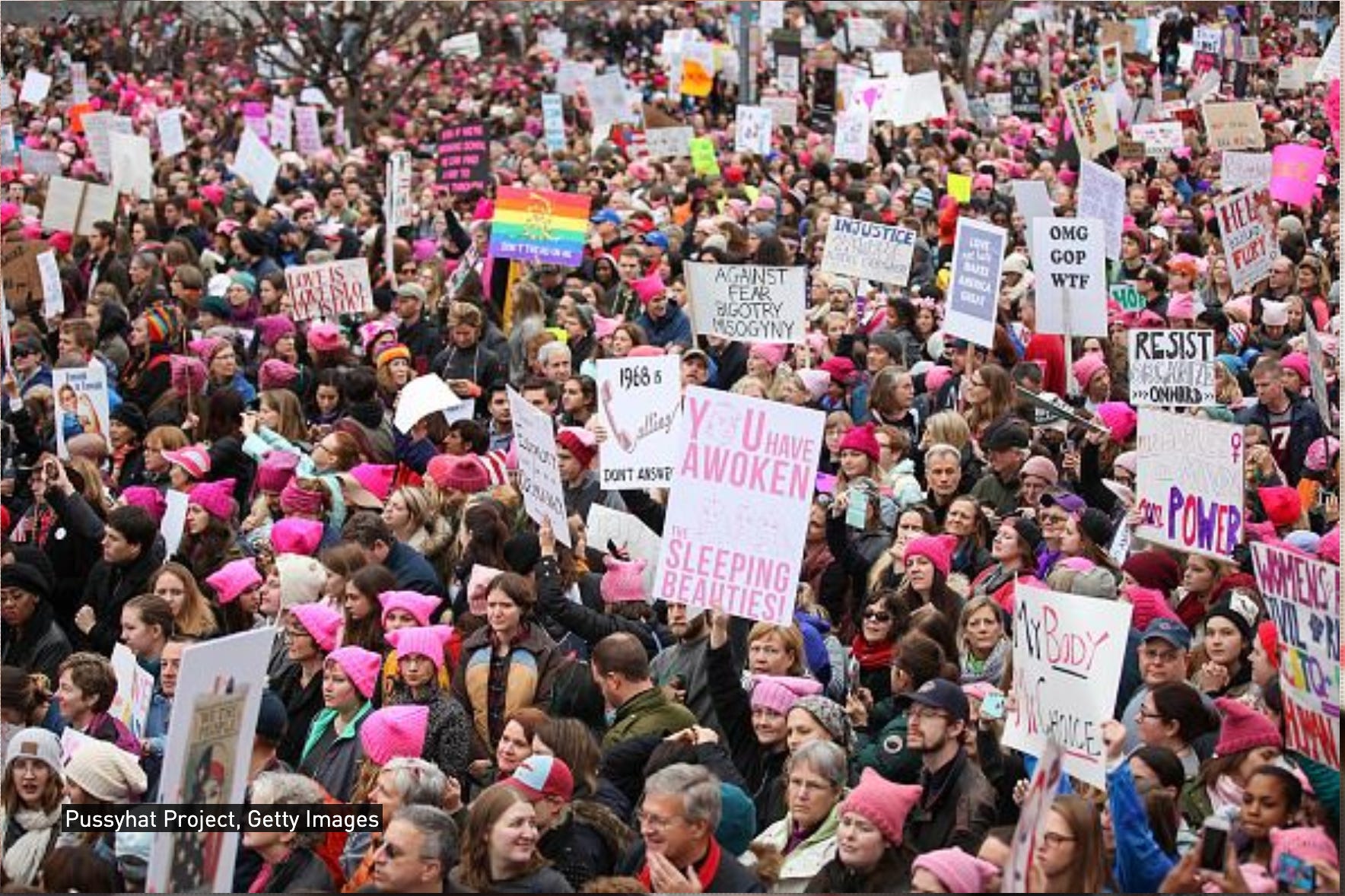
And so, with traditionalists suddenly feeling on the back foot, they co-opted the underdog’s tools and re-established themselves as the leaders in political and cultural power.
But just like our culture and politics, our digital ecosystem is fluid. And as the pendulum swings again, we’re seeing new patterns emerge: a softer approach driven by personal storytelling that’s a mix of celebratory, rebellious, and vulnerable.
Perfection is out. Authenticity is in.
To understand the latest shifts, we have to look at what’s changed in our information ecosystem.
Yes, I’m talking about TikTok.
In 2020, TikTok was already large at 100 million monthly active users in the US. But it wasn’t taken seriously, dismissed as an unserious lip-synching and dancing app for teens. By early 2025, however, its user base had exploded by 70%. Today, TikTok matches the size of Instagram, and continues to grow across every demographic.
Why does this matter? Because TikTok didn’t just change what people watch. It changed how content is found, who gets seen, and what people trust.
Before TikTok, platforms like Facebook and Instagram built feeds based on what you told them: who your friends are, what you like, whom you follow. TikTok flipped that by removing the limitations of building your feed based on the people and things you already know. By seeing how you scroll past content, pause to watch videos, write comments, and share, the app curates your feed and makes adjustments in real time as you continue to engage with it. You don’t need to know or follow anyone to see videos you’ll like. And creators don’t need a pre-existing audience to build one. It’s a kind of massive leveling of the playing field.
That’s why someone like Nate the Hoof Guy can rack up 2.6 million followers with hoof-cleaning videos. If you’re on TikTok, I’m sure you’ve seen his content. Be honest, would you ever proactively tell a platform that you were interested in bovine podiatry? But now you’re invested in the hoof health of these cows, right? That, my friend, is the innovation of TikTok.

 Tiktok failed to load.
Enable 3rd party cookies or use another browser
Furthermore, unlike Instagram’s warmly filtered photos or Facebook’s laboriously written posts, TikTok is video-first. That changes the social contract between creators and viewers. As a medium, video demands more intimacy. It exposes your voice, your facial expressions, your quirks, and your environment. That’s why TikTok rewards emotional believability.
It’s also why we see legacy influencers often succeed on Instagram but struggle on TikTok. Take Meghan Sussex, for example. In 2017, she closed her personal blog and thriving Instagram account to enter British royal life. Now, she’s back online, building a business, and navigating a very new media landscape – one where the curated polish that made her aspirational in the Instagram era now reads, to many TikTok users, as over-produced and untrustworthy.
 Tiktok failed to load.
Enable 3rd party cookies or use another browser
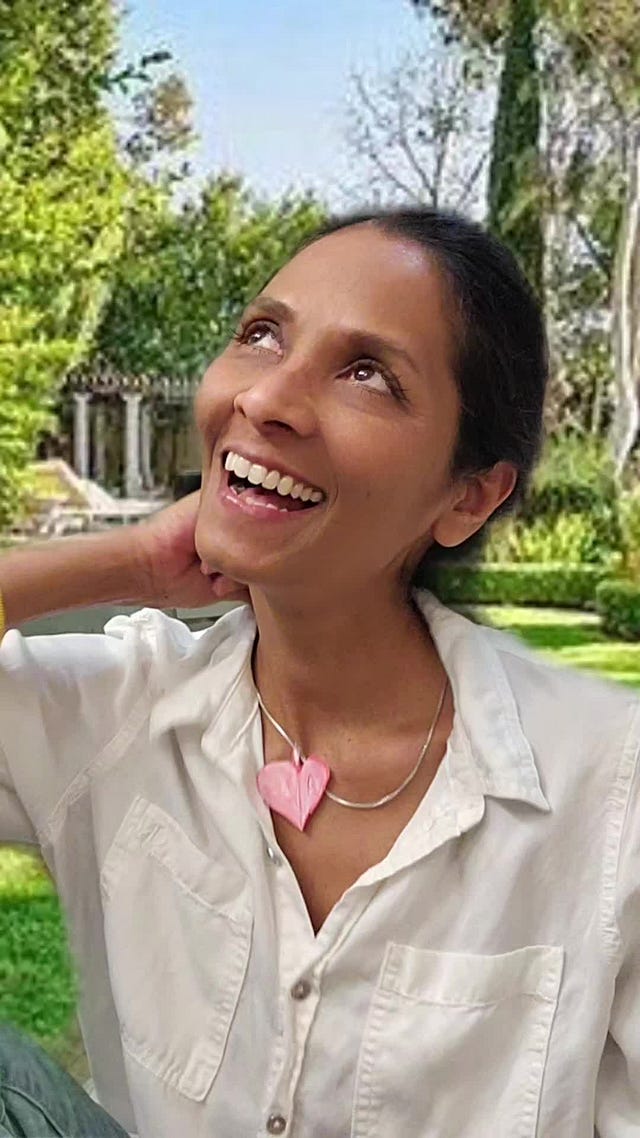
Contrast that with creators like @justbeingmelani, who shares her everyday experiences of marriage, motherhood, and perimenopause. No filters. No tacos in ballgowns. No exotic vacations or fancy coffees. Melani’s stripped down content about normal life has earned her over a million followers on TikTok and a profile in the New York Times.
 Tiktok failed to load.
Enable 3rd party cookies or use another browser
Modern day Storycorps
It’s exactly this kind of simple, bare bones media environment that has made it easier for people to hit record and build an audience. And in our current era, women are choosing to share stories about their lives that are more personal and complicated than ever before.
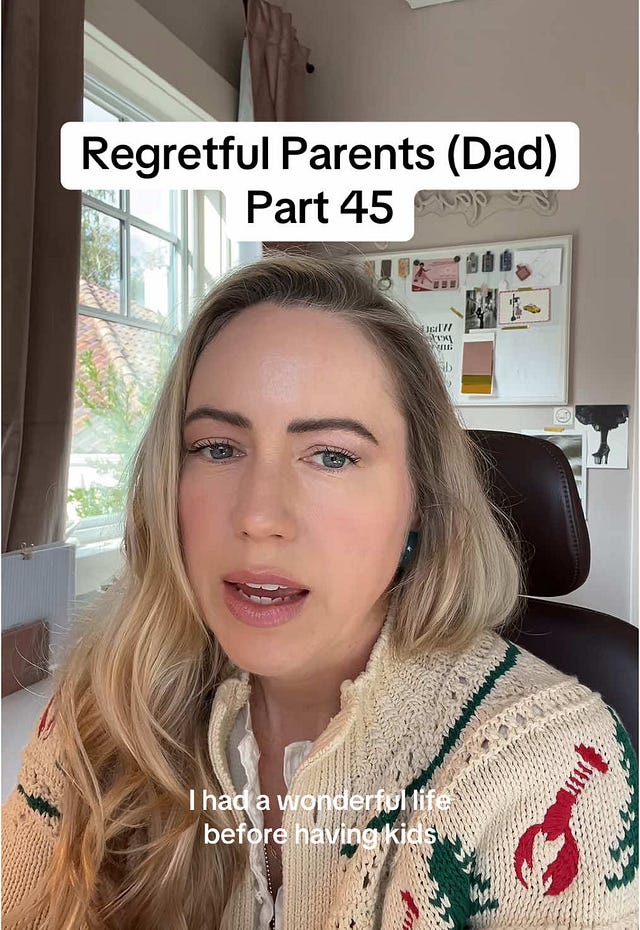
A prolific creator in this space is @kelleydaring. Kelley reads anonymous submissions about relationships and parenthood that are deeply nuanced and encompass the storytellers’ whole mix of love, hope, guilt, grief, and fear. The emotional grab bag is the same, regardless of which path they go down.
For example, here is a complex, loving story from a father:
 Tiktok failed to load.
Enable 3rd party cookies or use another browser
A common theme in the stories Kelley shares is an expectation from partners and families — often well-intentioned — and a young woman’s fear of disappointing them. I imagine that the social pressure for a traditional family structure presents in different and intense ways across cultures — expressed through a general absence of #childfreebychoice creators from immigrant communities. With social media providing the only glimpse that many young people have to life outside of their immediate circles, protecting their access to honest, diverse stories becomes all the more essential.
… and then there are the DINKs
Not all storytelling is heavy. Some of it is loud, funny, and cheeky.
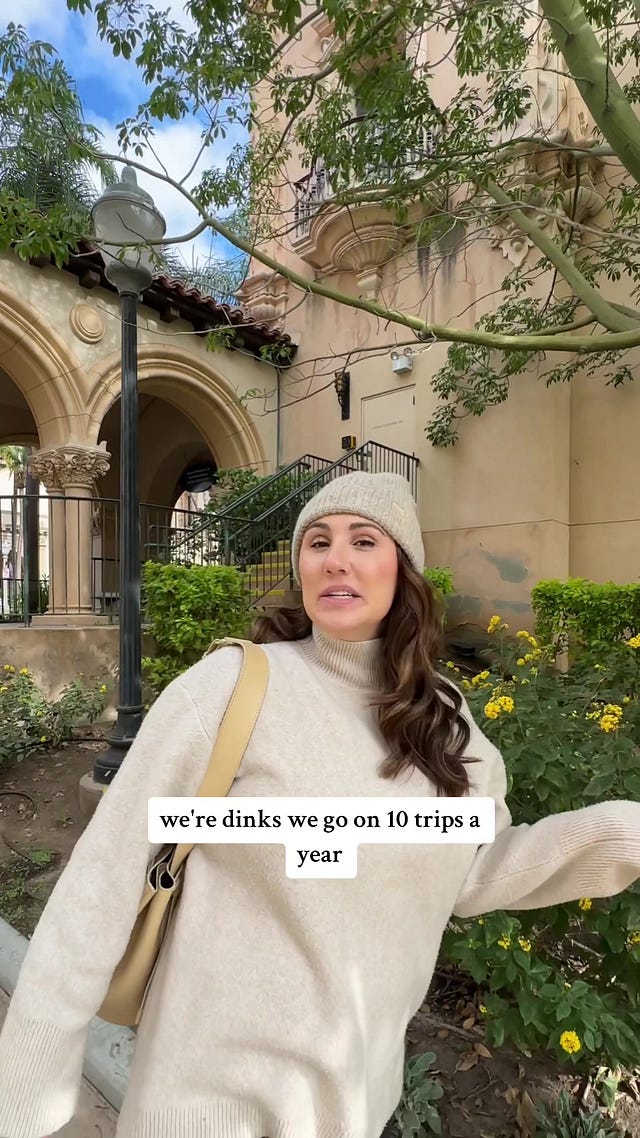
Enter the DINK creators, showing off their Double Income No Kids lifestyle of traveling, going on dates, and buying excessively at Costco. While tradwives center wifedom and motherhood as purpose, DINKs position their decision to not have kids as a gateway to freedom.
 Tiktok failed to load.
Enable 3rd party cookies or use another browser
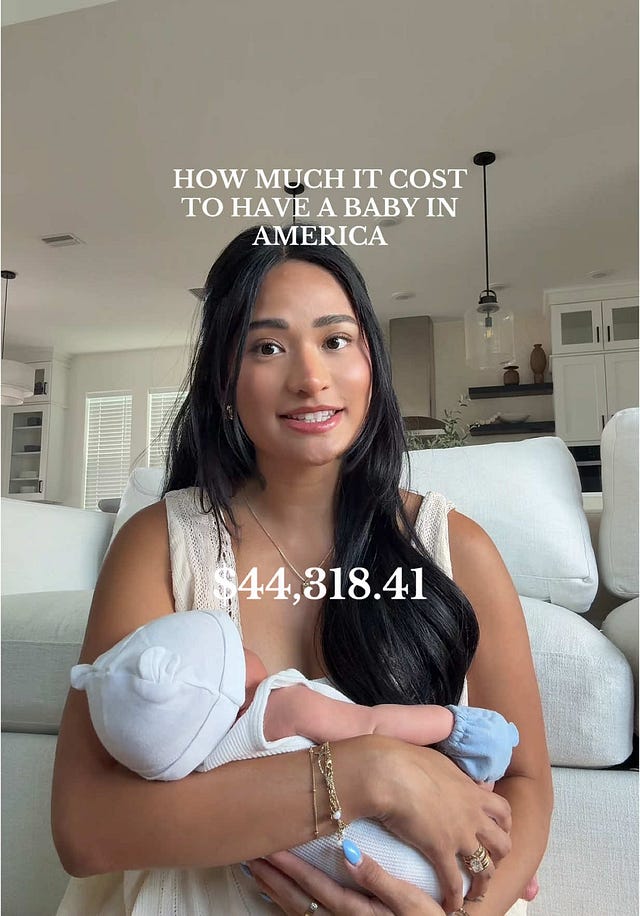
Like #tradwives, #dinklife is an oversimplification that packages a deeper political message inside a fantasy lifestyle. And in many ways, DINKS are echoing what parents are starting to say out loud.
I love my kids. But parenthood is hard.
This is particularly poignant at a time in America when politicians are advocating for more births, without supporting healthcare, caregiving, or education for children.
And with the growing divide between policymaking elites and the citizens they’re elected to serve, people are going online to show vulnerability and transparency in ways previously considered too personal or shameful to broadcast.
 Tiktok failed to load.
Enable 3rd party cookies or use another browser
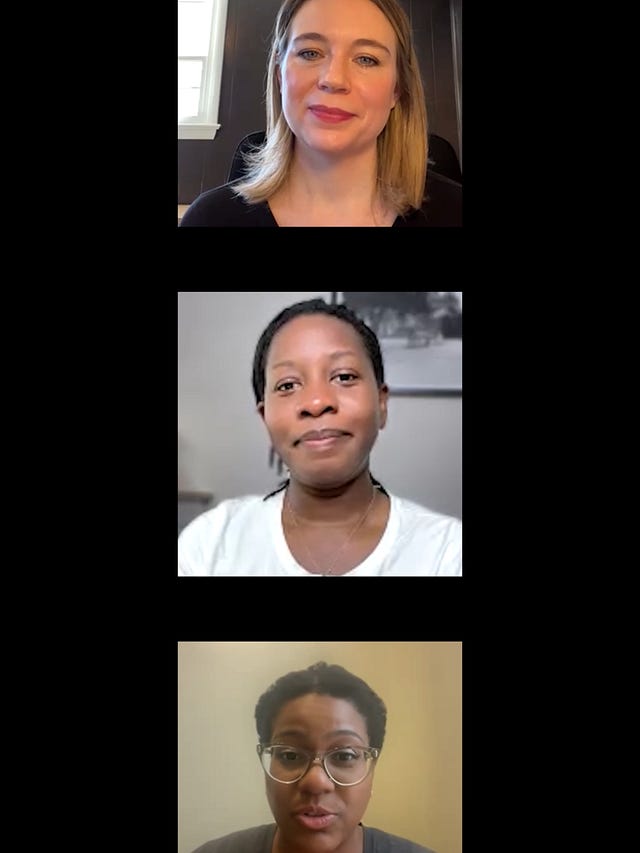
Their cumulative voices are reaching mainstream reporting. This week, NYT Opinion ran a story about how American policies and institutions are repeatedly failing parents — especially mothers.
 Tiktok failed to load.
Enable 3rd party cookies or use another browser
These systemic failures are the weak link in the pronatalists’ plan. And the movement to expose them — and hopefully build the support structures parents need — isn’t a coordinated campaign, but a tapestry of millions of short stories, delivered straight to the people, and inspiring others to share their own. Feeling seen and less alone. No matter your cause, this is how culture shifts.
Cat ladies, stand up
Within the next five years, nearly half of working-age women — who now outpace men in higher education — will have never married or had children. And yet they’re frequently dismissed, seldom celebrated while alive because weddings, baby showers, and funerals remain adulthood’s most prized rituals.
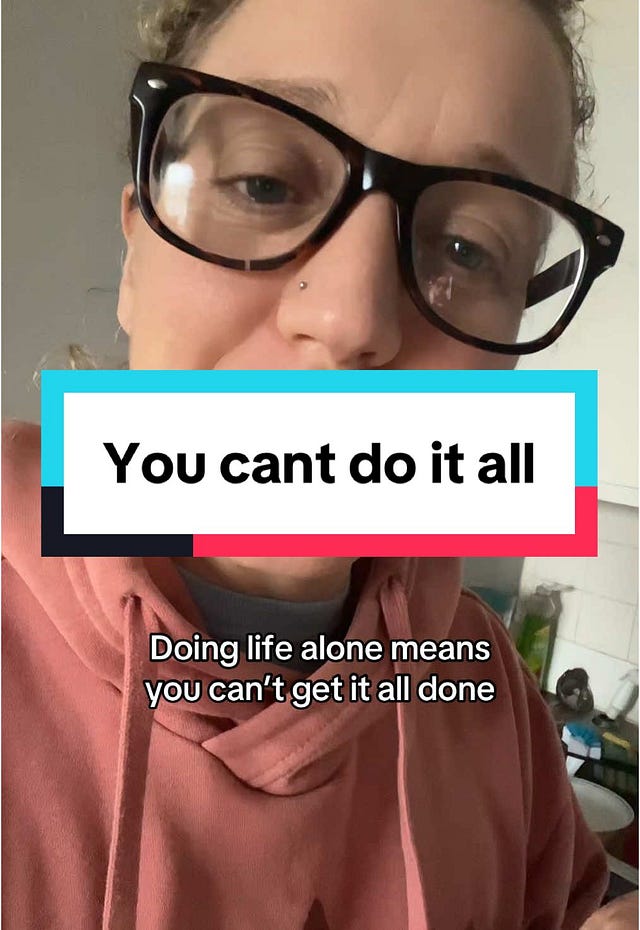
But solo women are showing up online too, as the heroines of their own lives and living on their own terms. Even when it’s messy, it’s ok.
 Tiktok failed to load.
Enable 3rd party cookies or use another browser
What we’re witnessing isn’t a coordinated campaign, but a movement all the same. Led by women releasing the facade and telling the truth about their lives. The love, sweat stains, joy, and loneliness of it all. There’s no one right way to live. No one right way to feel.
As our politics try to funnel women back into a monolith, social media has become the place where nuance survives.
before you go…
Scrolling through
Diego Luna, the star and co-executive producer of Andor (a Star Wars property that, unlike other cult series I’ve written about, actually served their story), guest hosted Jimmy Kimmel Live this week. He gave a powerful monologue on President Trump’s immigration policies and the importance of immigrants in the US.
Traditional late night lost me a long time ago, but credit to Jimmy for handing over his mic to a message this unequivocal. I’d love to know whether they flagged it in advance to the suits at ABC/Disney – which airs Jimmy’s show, owns the Star Wars franchise, and has famously struggled with the current administration – and what the internal chatter was after it aired.
As Venice plays reluctant host to Jeff Bezos’ and Lauren Sánchez’s wedding, Amy Odell of Back Row has highlighted another cultural pendulum swing. Sorry Shiv Roy, apparently #quietluxury is out. We’re firmly in the era of the tacky oligarchs.
and one more thing…
Happy place
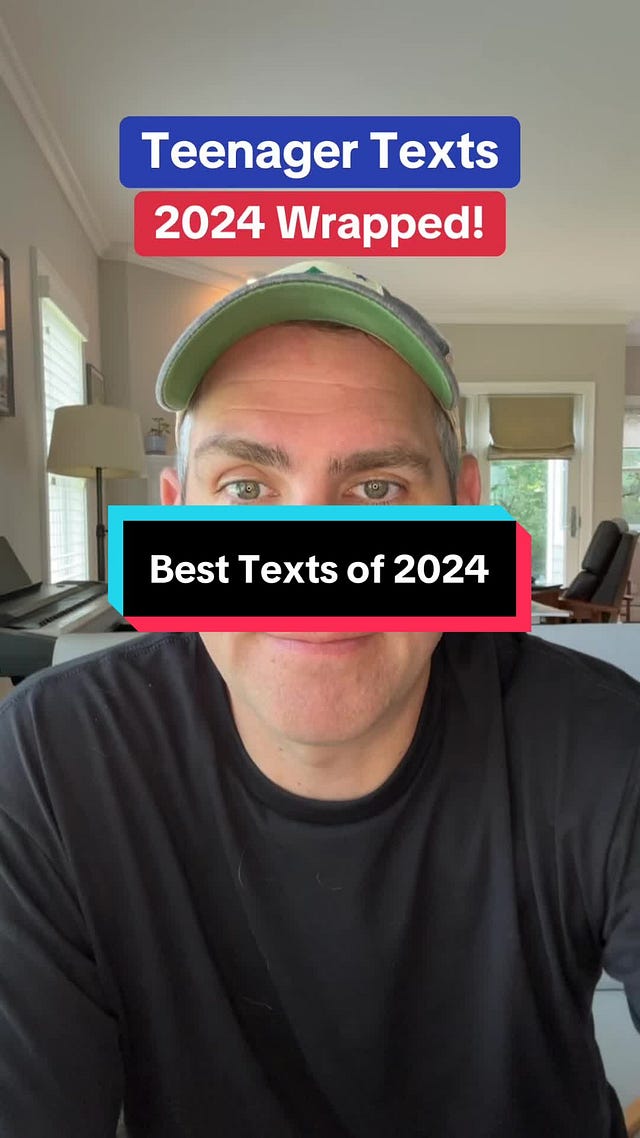
Here’s something not nuanced at all about parenthood: teens say the darndest things. Please enjoy this glorious wrap-up of teen texts from @the_leighton_show
 Tiktok failed to load.
Enable 3rd party cookies or use another browser