

🎧 Listen | 4:56 mins
So… people really don’t like AI.
This spring, university graduates across the United States booed commencement speakers extolling AI’s promise. Only 18% of young Americans feel hopeful about it. Indeed, AI is now less popular than ICE.
One question people keep coming back to is whether AI – a manmade thing – is indeed inevitable, or just forced onto us by corporate greed.

 Tiktok failed to load.
Enable 3rd party cookies or use another browser
There is truth to that. It takes a lot of money to build AI, and investors expect a return. More than $300 billion has been invested in OpenAI and Anthropic alone. That may explain why both companies are moving towards massive IPOs this year, despite profitability remaining elusive.
But there’s nothing new about commercial interests shaping social norms.
Bacon became a breakfast staple because of marketing. Diamonds came to symbolize marriage because of a De Beers campaign. Companies like Hallmark transformed holidays into obligatory gift-giving occasions.
So, yes. AI is here to stay because of commercial pressure. And because of geopolitical competition.
But also because it appeals to human nature.
◾
You can see this in the debate around AI and creative work. It’s already a big business – Ben Affleck recently sold his AI production startup to Netflix for $600 million. Meanwhile, writers, artists, musicians, filmmakers, and editors have become some of AI’s loudest critics. As one recent campaign, co-signed by big names like Scarlett Johansson and Cate Blanchett, said: stealing is not innovation.
And yet, according to a 2026 Stanford report, generative AI is being adopted at historic speed worldwide — faster than either the personal computer or the Internet.
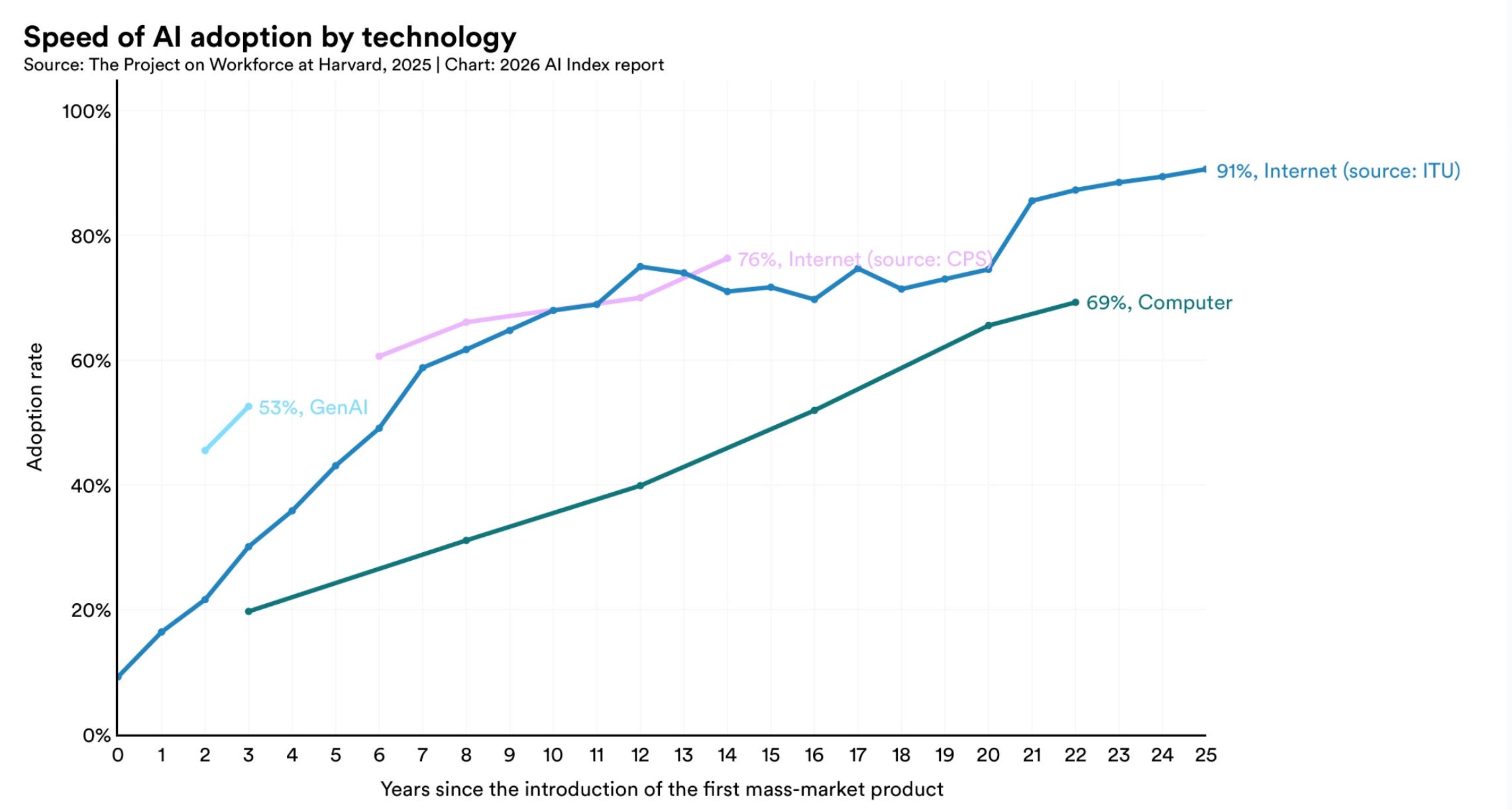
For what it’s worth, I don’t think that AI companies are setting out to destroy the creative class. I think they’re building products that solve a problem for a certain customer: people who want to create without having to spend years mastering a craft.
◾
Of course, that’s an oxymoron because creativity — like all forms of expertise — is inherently laborious. It requires being bad at something for a while, and doing it anyway. It demands vulnerability, rejection, frustration, and repetition. Getting good at being creative is incredibly hard.
But AI offers a solution. It enables you to fast-track parts of the labor and the process. It helps you to write faster, to make more designs, and to automate editing. To create something that looks finished without the same investment of time, effort, blood, sweat, and tears.
That’s appealing to a lot of people. But what does it mean for the information ecosystem?
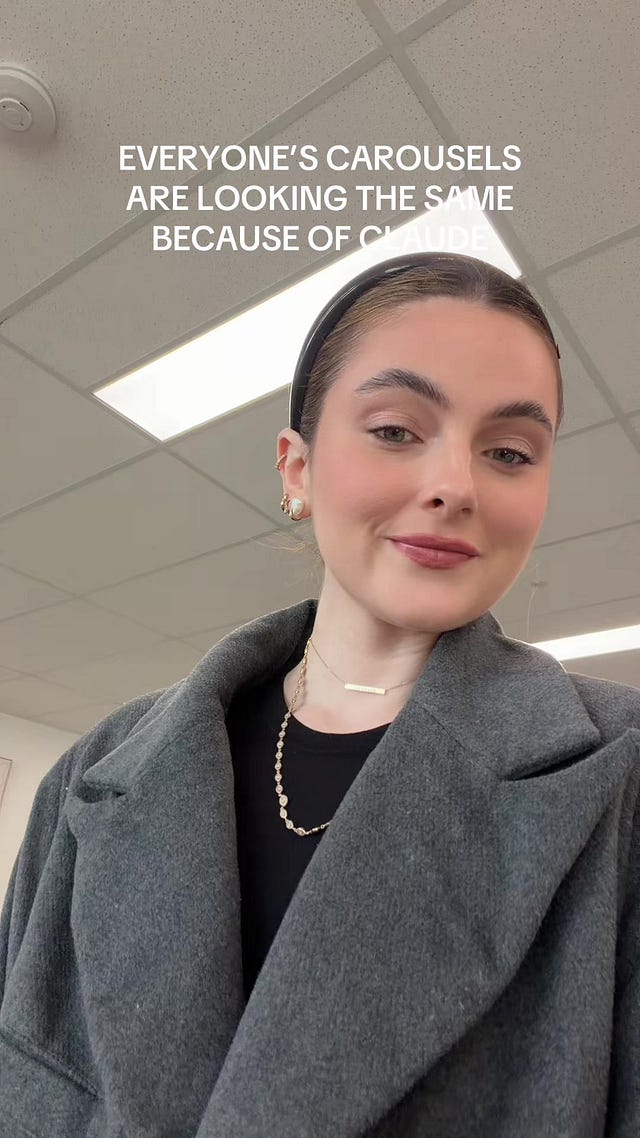
I’ve long argued that AI will raise the floor of content quality, and the ceiling will also rise. As a result, we’ll get more content than ever before, but much of it will look and feel the same. Mediocrity will become the new baseline.
Those who put in the effort to develop original perspective and truly master their craft will still stand out. In a world of AI sameness, they may stand out even more.
 Tiktok failed to load.
Enable 3rd party cookies or use another browser
This will result in different content tiers. Like in food or fashion, fast content will become its own category: abundant, inexpensive, and quickly discarded. On the other hand, slow content – like any artisan craft – will continue to have its place and audience.
◾
But different content classes shouldn’t lead to different information classes. For those of us who care about information quality and equity, our focus needs to be on preventing that from happening.
Both fast and slow content serve a purpose and an audience. Both audiences deserve access to credible information from experts and institutions that exist to serve the public.
All of the public. ◾